Since 1947, Ri-Industries has been manufacturing precast concrete products for homes, businesses, farms, and infrastructure projects across South Australia.
Over the decades, we’ve seen construction methods evolve, equipment get more advanced, and regulations continue to change. But one thing has remained constant: quality underground infrastructure begins long before a tank is delivered to site.
Whether it’s a rainwater tank, septic tank, wastewater system, trade waste arrestor, stormwater sumps or pump station, the products we manufacture are designed to do something most people never think about: they quietly perform their job every day for decades.
After nearly 80 years in the industry, here are a few lessons we’ve learned along the way.
Every Site Tells a Different Story
No two projects are exactly alike.
A rural property has different requirements than a commercial development. A new housing estate presents different challenges than replacing an ageing wastewater system. Soil conditions, site access, groundwater, and available space all influence the best solution.
That’s why understanding the site is just as important as understanding the product. Taking the time to assess site conditions before delivery helps ensure the right product is specified and that installation runs as smoothly as possible.
Quality Starts in the Factory, Not on the Job Site
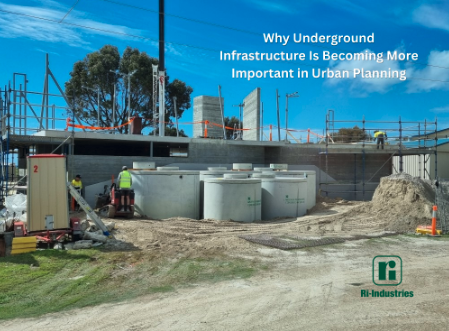
When people see a precast concrete tank arrive on site, they’re seeing the final stage of a much longer process.
Long before delivery, every tank has gone through careful design, planning, reinforcement, manufacturing, curing, and quality control. Precision matters at every stage, because once a tank is installed underground, it’s expected to perform reliably for decades.
Planning Ahead Saves Time for Everyone
One of the most common causes of project delays isn’t the tank itself, it’s the site not being ready when we deliver our products.
Clear access for delivery vehicles, completed excavation, a properly prepared base, and coordination between trades all contribute to a smooth installation.
When everyone involved in the project communicates early, installation is typically faster, safer, and more efficient. Good planning doesn’t just save time. It helps avoid unnecessary costs and keeps projects moving forward.
The Best Infrastructure Is Often the Infrastructure You Never Notice
Unlike many building materials, underground infrastructure rarely gets noticed once the project is complete.
There are no grand openings for a wastewater tank or stormwater system. No one admires a trade waste arrestor that’s buried beneath the surface. The best underground infrastructure simply works – day after day, year after year – without demanding attention.
For homeowners, property owners, developers, and councils alike, reliability is one of the most valuable features a product can offer.
Experience Still Matters
Technology continues to improve, and manufacturing processes have advanced significantly over the years. But experience remains one of the industry’s greatest assets.
After nearly eight decades of manufacturing precast concrete products, we’ve learned that successful projects are built on more than quality materials alone. They rely on careful design, planning, practical knowledge, attention to detail, and a commitment to doing the job right from the beginning. While the products have evolved since 1947, that commitment hasn’t changed.
Building for the Long Term
At Ri-Industries, we’ve always believed underground infrastructure should be built with the future in mind.
As we approach 80 years of manufacturing in South Australia, we’re proud to continue supplying durable, reliable precast concrete solutions that are built to stand the test of time, because quality infrastructure isn’t measured by how it looks on installation day, but by how well it performs for decades to come.