
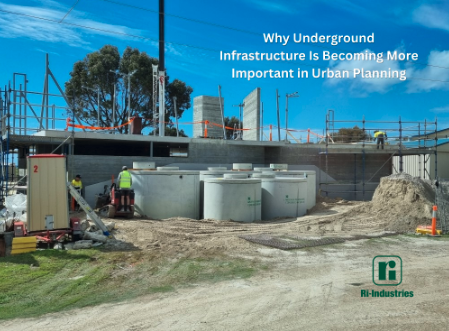
Underground infrastructure is becoming one of the most important tools in modern urban planning. As cities grow and available land becomes more limited, planners are increasingly moving critical systems below the surface, from stormwater management and water storage to utilities and civil infrastructure, allowing communities to function efficiently without sacrificing valuable space above ground.
From stormwater systems and utilities to underground storage and structural infrastructure, building beneath the ground is becoming a key strategy in designing efficient, resilient cities.
In South Australia, companies like Ri-Industries play an important role in supporting this shift toward underground infrastructure. By manufacturing high-quality precast concrete tanks and civil infrastructure components, Ri-Industries provides durable, engineered solutions that help developments manage water storage, stormwater systems, and other critical underground installations designed to last for decades.
The Challenge of Growing Cities
Urban areas across the world are experiencing steady population growth. As communities expand, available land becomes more limited and more expensive. Every square metre above ground is valuable, whether it’s used for housing, parks, commercial space, or roads.
Because of this, planners and developers are increasingly prioritising solutions that maximise usable space above ground while relocating essential infrastructure below it.
Underground infrastructure allows cities to function efficiently without sacrificing the surface areas that make communities livable.
Making Better Use of Limited Land
One of the most practical advantages of underground infrastructure is the ability to free up valuable surface space.
Instead of occupying land with large visible structures, systems such as water storage tanks, stormwater detention systems, and utility networks can be installed below ground. This allows developments to maintain open landscapes, green spaces, and functional urban environments while still accommodating necessary infrastructure.
For residential developments, commercial projects, and public spaces alike, this approach supports smarter land use and better overall planning outcomes.
The Role of Underground Infrastructure in Stormwater Management
Water management is one of the most important considerations in modern urban design. As cities grow and surfaces become more paved and developed, managing rainfall and runoff becomes increasingly complex.
Underground infrastructure plays a critical role in helping cities handle these challenges. Systems such as underground tanks and detention structures help store, regulate, and manage water flows, reducing pressure on drainage systems and helping to prevent flooding during heavy rainfall events.
These systems also allow developments to incorporate water storage without disrupting the visual landscape of the site.
Supporting Long-Term Infrastructure Durability
Urban infrastructure is expected to last for decades. Because underground installations are often difficult to replace or relocate once installed, durability and structural strength are essential.
Precast concrete solutions are particularly well suited for underground infrastructure due to their strength, longevity, and ability to withstand the pressures of surrounding soil and groundwater. Properly engineered systems can remain in service for many decades, providing reliable performance with minimal maintenance.
Precast concrete is widely used in underground infrastructure because it provides exceptional structural strength, long service life, and the ability to withstand soil pressure and groundwater conditions.
For infrastructure planners, this durability is a critical factor in ensuring long-term value.
Protecting Infrastructure from Environmental Exposure
Another advantage of underground infrastructure is protection from environmental conditions. Systems installed below ground are shielded from direct sunlight, extreme temperature fluctuations, vandalism, and accidental damage.
This protection can help extend the lifespan of infrastructure while maintaining consistent performance over time.
For water storage systems, underground placement can also help maintain cooler water temperatures and reduce the risk of algae growth compared to above-ground alternatives.
Designing Cities for the Future
Urban planning continues to evolve as cities look for ways to become more efficient, resilient, and sustainable. Incorporating underground infrastructure allows planners and engineers to make better use of available land while supporting the essential systems that keep cities running.
By combining thoughtful design with durable materials and engineered solutions, underground infrastructure helps to shape the future of modern urban development.
As communities continue to grow, looking below the surface may be one of the smartest ways to build cities that work better for everyone. In South Australia, manufacturers such as Ri-Industries contribute to these solutions by producing engineered precast concrete systems designed for long-term underground installation.