Top Myths About Septic Tanks

by Ri Industries

Ri-Industries Septic Tank


A septic system not used or maintained properly can bring unsolicited problems as well as become a health hazard and compromise the quality of your water. Here are 4 common myths Ri-Industries wants septic tank owners to be aware of:

MYTH #1: The amount of water a family uses or consumes does not affect its septic tank system.

Water consumption and use, whether through leaking pipes and taps or excessive laundering, will increase the amount of effluent that travels through the tank, requiring more frequent pumping. Ri-Industries recommends being diligent about thorough routine inspections of your plumbing fixtures in addition to your septic tank.

MYTH #2: Bacteria additives are not necessary for your tank.

Solids are broken down by the presence of bacteria; therefore bacteria additives may be an alternative to help your system break down the grease and oils to help your septic tank to work properly and efficiently

MYTH #3: Pouring household chemicals down your drain does not harm your septic tank.

One of the easiest ways to rid your house of chemicals and hazardous materials is to flush them down the drain or toilet. Don’t do it. This practice can cause damage to your septic system and is a health hazard. A great way to avoid toxins in your house and your septic system is to use all natural chemicals.

MYTH #4: If it ain’t broke, don’t fix it!

Don’t wait for a problem or for your tank to break. Routine maintenance of your system is required to keep your tank functioning and to prevent damage to your drainfield. Plus, your septic tank will last longer with proper preventive maintenance—and will save you money in the long-run.
If you own a septic tank system and are unsure of how it works, and what is required to keep your tank in good working condition, don’t hesitate to contact us at Ri-Industries. We serve customers throughout Adelaide and South Australia.

The Benefits of the Ri-Scape Septic Tank

by Ri Industries

ri image


When thinking about home improvements, most people will focus on painting, furnishings, landscaping and more. These are fun projects to dive into with beautiful results to enjoy. One necessity for your home, although it may be one you would prefer not to think about, is a septic tank. A properly functioning septic tank is crucial to enjoying all of those home improvements you worked so hard to complete.

 Ri-Industries has some good news to share. The recently introduced Ri-Scape septic tank eliminates many concerns homeowners have when installing septic tanks. Normally, when installing septic tanks, two holes must be built, one for the tank and one for the pump chamber. The beauty of the RI-Scape is that it is smaller than typical septic tanks and is an all-in-one unit with the pump chamber already incorporated into the tank. This means that only one hole is required. This is great news for people building in smaller areas but also if they live in areas – like along the River Murrary – where pipes connecting the tanks and the pump chambers are prone to break and link, due to land movement. There is also no chance of the Ri-Scape leaking.

If you are interested in learning more about the Ri-Scape septic tank, or any of the products offered by Ri-Industries, please call us at 08 8444 8100.


4 Unique Uses for Precast Concrete Tanks

by Ri Industries

RI industries is well known for its precast concrete tanks used for waste water treatment systems, septic systems, and concrete rain water tanks, but there are other uses for a precast concrete tank.

Here are 4 unique ways to use a precast concrete tank:

1. Storage

A precast concrete tank is an excellent choice for your underground or above-ground storage needs. Whether you want storage space for water, grain and recycling materials, the sturdiness and durability of precast concrete is a sure bet. Also, concrete tanks are ideal to store anything you don’t want to lose in a fire.

2. Shelter

Homeowners, particularly in storm-heavy areas, will benefit from a concrete shelter that can provide a dry, safe haven to weather any storm.

3. Sculpture Base 

Precast concrete tanks are a strong base for sculptures and signs. The concrete is typically stained to compliment the sculpture that will utilise the base space. Also, precast concrete tanks are often used to create an aesthetically pleasing entrance sign in shopping malls, restaurants, churches, neighborhoods and more!

4. Plunge Pool

Plunge right into your own precast concrete pool. Compact and economic plunge pools can be used 365 days a year and decorated with tiles to compliment any outdoor garden space. These pools are easy to heat and maintain.

For more information on precast concrete tanks, contact us or download our app to view our precast concrete tank specifications.

5 Ways to Avoid the Cost of Replacing Your Septic Tank

by Ri Industries

Replacing a septic tank is costly. Though it may be necessary at some point in your lifetime, scheduled routine maintenance and inspection of your septic tank can lengthen the life of your septic system. Ri Industries recommends doing these five things to avoid replacing your septic tank.

5 Ways to Avoid the Cost of Replacing Your Septic Tank

1. Keep Foreign Materials Out

It is important to keep foreign materials from getting flushed into your system.  Flush biodegradable only; items such as dental floss, tampons, condoms, plastic bags and grease should not be disposed of through your septic system.

2. Remove Sludge

Sludge will build up and block your outlet pipe, eventually causing the septic system to fail.  Periodically removing sludge, often called de-sludging, will keep your septic system processing properly. Ri Industries recommends de-sludging every 3-4 years, or according to local regulations.

3. Conserve Water Usage

Water conservation will keep your septic system in good working condition by reducing the amount of water absorption in your drainfield.   Ways to reduce your water usage include repair leaky taps and toilets; use water-saving showerheads and low-flow toilets; and not running water when brushing teeth or shaving.  Also, when machine laundering, be sure to wash full loads or change your settings to accommodate smaller loads.

4. Maintain Proper Tank Conditions

The enzyme/bacteria in your septic tank converts the solids to liquids – a process necessary to begin purification. To remain at the septic tank system’s recommended bacteria levels, do not dispose of household cleaners, drain openers, chlorine bleaches and other harsh chemicals through the system.

5. Know Your Septic System

Understand your septic tank system’s design; know how it operates and follow the manufacturer’s recommendations on how best to care for your septic tank system. Remember— knowledge is power.

In addition to these five maintenance tips, prepare a routine checklist and maintenance schedule, and stick to it. Septic tank inspections should occur 1-2 times each year to allow for timely detection of operating issues and may deter a full replacement of your system.

Do you have any questions about your septic system? Please do not hesitate to contact us for your septic tank needs in Adelaide and South Australia.

3 Steps to a Healthy Septic

by Ri Industries

In order to make sure that you are healthy, it is important to visit the doctor for a check-up from time to time.

But what ensures the health of your septic tank? Believe it or not, a healthy septic starts with you.

Here are the steps you should take to make sure your septic tank is healthy:

Step 1: Know the Signs

Just as a cough and a fever are signs of illness, your septic tank can exhibit certain signs that it might be time for repair. What are those signs that every responsible septic tank owner should know?

Something smells funny- you know your septic tank is sickly if the air around it smells – usually like rotten egg gas.

Something is damp- things are probably not working properly if the ground around your septic tank is damp or soggy, or pools form downhill.

There is unusual grass growing- it might be time to contact a professional if you see dark green grass growing on or around the absorption area of your septic tank.

Your flush is ineffective- a sure sign of a broken septic is when your toilet or drains are slow to clear, or keep backing up.

Step 2:.Pay Attention

If your septic tank has not been checked for more than 12 months, you may start to experience the smelly, damp, and slimy problems that come along with a malfunctioning septic. The most common cause of septic problems is when septic tank owners forget to pump out the septic every 3-5 years.

Step 3: Call in the Experts

Although you can play septic tank doctor now and then, it is also important to call in professionals when the going gets tough. If you see any signs of a sickly septic, you should act quickly so that the damage, and the cost of repair, does not get any worse.

Here’s who to call if you are experiencing any of these problems:

1) Your council environmental health officer– if in doubt, call for advice. Often a phone call to the council will either solve the problem or put your mind at rest.

2) A plumber, septic system expert or septic pumper –Plumbers, pumpers, and experts can be found under Septic Tank Cleaning Services in the Yellow Pages or Google search.

3) Ri-Industries– Do you have any questions about your septic? As always, do not hesitate to contact us.

4 Reasons to Pump Your Septic Tank

by Ri Industries

Most people do not enjoy doing chores. But sometimes, the least appealing activity can turn out to be the most necessary.

The team at Ri-Industries does not want to be a “pump grump,” but there are many reasons that you should get out there at least once a year to clean out your septic tank. We have compiled a list that will hopefully motivate you to get your septic system chores done.

So, why exactly is it important to pump out your septic tank on a regular basis?

Reason 1: Even your septic tank deserves a long, healthy life

Ri-Industries strives for excellence, with engineering experience that spans 60 years and extended 10 to 15 year warranties for our products. Pumping your septic tank at least every four to five years will help ensure the longevity of your tank, perhaps even beyond warranty.

Reason 2: It is important to be a good neighbour

No matter how friendly you may be with your neighbours, they will not be pleased with the smell if you let your septic tank fall into neglect and overflow. The last thing Ri-Industries wants is for you to be known as “the neighbor who smells like poo.” Keep your family and community happy and healthy by ensuring that your tank does not overflow.

Reason 3: You can save money

The cost and effort of getting your Ri-Industries septic tank pumped is minimal, while a failing or improperly maintained septic system may result in costly damage. By pumping your Ri-Industries septic tank regularly, you can maintain the value of your property, and save expenditures on repairs.

Reason 4: Satisfaction

Once you pump your tank, the job is done. It is as simple as that! Pumping your tank at least once every four to five years is an easy way to feel accomplished about maintaining a happy and healthy household.

Now that we have told you why it is important to maintain your septic tank, you might be wondering just how to maintain it. If you have any questions about how to maintain your septic tank, Ri-Industries is here to help. Please do not hesitate to contact us with thoughts and questions at [email protected] / 08 8444 810, or through our Contact Us page.

Septic Tank Smells, Decoded

by Ri Industries

Do you ever wake up from a long night of sleep, take in a deep breath and think, “Ah, I just LOVE the smell of septic in the morning!” You probably don’t. Or at least, we hope you don’t!

It would be natural for your septic tank to be smelly because it’s a receptacle for human waste.  But you should never be able to smell the septic on your property because a Ri-Industries septic tank is designed to contain its own odour. The plague of uncontrollable septic odour is more than just a nuisance; it is a sign of sewage issues which, if left untended, can contaminate the water supply and lead to dangerous situations.

What is a diligent septic tank owner to do when their septic starts to smell? Ri-Industries has decoded some of the common problems that lead to stink, and how to solve them:

Smelly Problem #1: Full or Overflowing Septic Tank

Solution: This is the easiest smelly situation to solve. Simply have your tank pumped. A septic tank’s size is usually determined by the expected water usage for your home, and most septic tanks are designed to be pumped every 4 years. If you have a leaky tap, or are using more water than usual, you may need to have the septic tank pumped more often to reduce the septic smell.

Smelly Problem #2: Covered Septic Tank Vent

Solution: If your home has been remodeled or renovated since your Ri-Industries septic tank was installed, your septic tank may have been capped or covered up. If you have a septic tank in an older house, check to see that the head vent off of the main drain is still attached and extends above the roof line of the house. When dealing with an old septic tank, make sure to keep your vents uncovered and in best repair.

Smelly Problem #3: No Septic Tank Vent

Solution: If you are experiencing septic tank odour, you may need to install a proper septic tank vent in your home. If the tank wasn’t installed properly, it may have been installed without any sort of vent at all. If you notice the odour mostly after showering, then this is likely the case.

Smelly Problem #4: Bad Chemistry

Solution: Some things simply shouldn’t go into the septic tank. Here is a list of things you shouldn’t let go down the drain: cooking grease, oil or fat, industrial cleaning products, paints, solvents, feminine hygiene products, condoms, antibiotics and other expired medications, anti-freeze, transmission fluid, or gasoline. These can disrupt the sewage breakdown and cause pungent septic tank odours.

If you have tried all of these solutions to your smelly septic problem and the odour still persists, please do not hesitate to contact us  with questions.

What to Do With A New Septic System

by Ri Industries

We at Ri-Industries are always here to answer our customers’ questions, and one of our most frequently asked questions is how to get started with a new or recently pumped-out septic. There can be a lot of different information floating around in the murky water of the septic world, so Ri-Industries would like to clear things up.

Do I need to do anything to start my new septic?

When purchasing a new septic system, you may wonder if there is something special you might need to do in order to get it started. Here is some background knowledge that might be helpful for your septic tanks’ ‘opening ceremony.’

The dead possum myth

In the old days, when a new septic system was started up on a farm, a dead possum or sheep was thrown in to the septic tank; septic folklore had it that the rotten possum would ‘kick-start’ the system. Some people even suggest dropping buttermilk or raw meat into your septic in order to add some additional bacteria.

Myth busted:

How trustworthy are these at-home remedies for starting up your septic tank? Because raw meat and buttermilk would add minimal amounts of bacteria in comparison to the size of your tank, you would need to use them daily, and this would be insensible, costly (and weird). As for the possum myth, if you are installing a new septic system in the near future, it could certainly be difficult to find a possum or sheep on such short notice!

In the end, the sewage which starts flowing into the tank as soon as it is connected to the house provides plenty of nutrients for the bacteria to begin doing their job; no possum, sheep, or buttermilk required.

The recommended treatment:

To start up a new or pumped out Ri-Industries septic system, fill the tank with clean water and add a cupful of lime down the toilet every day for 7 days. This little bit of extra added effort at the beginning of your septic tank’s life will be worth it in the long run. The lime prevents odours and increases the pH (alkalinity), which encourages bacterial growth.

Remember that good bacteria can be your septic system’s best friend, and there are many ways to maintain good bacteria in your septic tank. If your septic becomes smelly over the course of its lifetime, try repeating the lime treatment to promote further bacterial growth.

When it is time to get your new Ri-Industries septic system off to a start, please do not hesitate to contact us. We promise there will be no possum involved!

12 Septic Tank Facts That You Need To Know

by Ri Industries

Do you own a septic tank, or are you thinking about installing one? Knowing the facts about septic tanks will help you maintain the life of your investment.

Here are 12 septic tank facts that you need to know.

Septic Tank Maintenance

  • A septic tank needs to be pumped out every four years if you have 4-6 family members.
  • Have your septic tank inspected once or twice a year to make sure there is no buildup that can cause damage to your system.

Drainage Field Maintenance

  • Make sure all water is diverted away from your drainage field.
  • Never park a vehicle on your drainage field. It could lead to ruptured pipes.
  • Ideally, only plant grass in your drainage field. If you want to add plants, make sure to pick ones with shallow root systems.

Draining

  • Never pour grease down your drain. Grease doesn’t allow the soil around your drain field to absorb liquids, which could cause a backup.
  • Do not pour motor oil, antifreeze, paint, pesticides or potent cleaners down your drain as they will kill the bacteria that break down the solids in your septic tank.

Flushing

  • Never flush plastic bags, disposable nappies, tampons or other non-biodegradable items down your toilet. Septic tanks cannot break down these materials.
  • Don’t flush disinfectants or old medicines down your toilet. It can affect the bacterial action of your septic tank, making it work ineffectively.

Warning Signs

  • If you see effluent pooling near your seepage trench, it’s more than likely a warning sign that your septic system is clogged.
  • An unusual odor around your septic tank can be a sign that your system needs repair.
  • Look at the grass around your septic tank. If you notice darker grass growing around the area, you should get your septic tank checked out.

Also, be sure to consult with your Local Council Health Inspector to understand septic tank maintenance requirements for where you live. If you need more information about septic tanks, please contact us, and we will be happy to help.

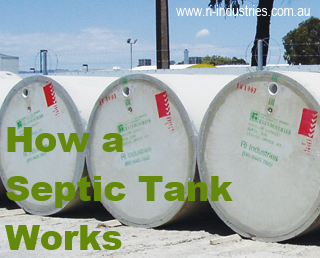
How a Septic Tank Works

by Ri Industries

If you are reading the Ri-Industries Blog, chances are that you might already own or are planning to install a septic tank on your property.

But how does a septic system work, exactly?

This is a fairly common question that people search for on the Internet every day. The Ri-Industries team is always here to answer your questions, so without further ado, let’s get down to basics.

How a septic tank works

Parts of a septic tank:

A septic tank generally consists of a tank (or sometimes more than one tank) connected to an inlet wastewater pipe at one end and a soakage field at the other. In general, the design of the tank usually incorporates two chambers, which are separated by means of a dividing wall that has openings located about midway between the floor and roof of the tank.

The purpose of a septic tank:

A septic system uses natural processes to treat and dispose of wastewater in your home, and provides biological treatment of the sludge and scum layers that accumulate there. The soil acts as a biological filter for the undesirable wastewater components remaining in the effluent.

How a septic tank works:

Wastewater flows down through the sewer pipes in your home and enters the first chamber of the tank, allowing solids to settle (sludge layer). A crust then forms on the surface of the effluent, known as the scum layer. The settled solids are anaerobically digested, reducing the volume of solids. The liquid component flows through the dividing wall into the second chamber, where further settlement takes place, with the excess liquid then draining in a relatively clear condition from the outlet into the soakage field.

If you are looking for further ways to utilise your septic tank, check out the Ri-Treat wastewater treatment system. The Ri-Treat wastewater treatment system is an aerobic system which means you can recycle your wastewater for irrigation purposes.

Ri-Industries is always here to answer your questions, so please do not hesitate to contact us.

The Smart Way to Water Your Garden

by Ri Industries

You may have heard the saying, “The grass is always greener over the septic tank.” The moisture and nutrients in the drainage field of your septic tank help to fertilise your garden the natural way.

By taking interest in a Ri-Industries septic tank or aerobic waste water treatment system, you are already well on your way to conserving water and energy for your home. What you may not know is that the benefits of a septic tank or waste water treatment system do not stop with installation. Ri-Industries can help you water your garden the smart way, even after all of the wear and tear of daily use.

How to water your garden, the smart way:

#1: Use Ri-Treat to Irrigate Your Garden

The Ri-Treat Waste Water System works to clean and reuse your waste water from the toilet, kitchen, and laundry to irrigate your garden. Ri-Treat features a high quality irrigation kit for more effective irrigation. This system is certainly a cost-efficient and environmentally friendly way to keep your garden looking green and healthy.

#2: Water your garden only when it needs it

While the Ri-Treat system can efficiently recycle your waste water for your home, it’s up to you to decide when your garden needs watering. To find out if your lawn needs water, use this rule of thumb: stick your finger about 4 cm into the soil, and if the soil is not moist, it is time for a shower!

#3: Put your garden on a schedule

For those of us who do not have time to stick our fingers in the soil every day, it is recommended to water your garden deeply and infrequently (about 2.5 cm a week). But how do you measure how much water your lawn is soaking in? For this, you can use a rain gauge or a cup of water placed in your garden and a ruler. Run your irrigation system for about 15 minutes, check the amount of water left in the cup or rain gauge, and you can do some quick calculations to find out how much water per hour is coming from the sprinkler.

#4: Water early

When you use your irrigation system, some of the water will evaporate before it even hits your garden. To make sure that your garden drinks up the highest amount of water possible, try watering very early in the morning, sometime between 4 am and 9 am.

As always, the most important tip for using your irrigation system the smart way is: location, location, location! Make sure that you are watering your garden, and not the pavement or the letterbox. To discover more sustainable living options from Ri-Industries, don’t hesitate to contact us.

Guidelines for Planting Your Garden Around a Septic Tank

by Ri Industries

Your septic tank is made up of a main outlet, a holding tank and a drainage field. The tank receives wastewater from your home plumbing system where it collects for a certain length of time until it exits the outlet and empties into the drainage field. There are certain plants that will fare better on or around your drainage field. So, what plants are good or bad for your wastewater treatment system? Here are some helpful “do’s” and “don’ts” for planting a septic tank friendly garden:

DO stay shallow

While being “shallow” is not considered a positive personality trait, it is very important that you stay shallow when it comes to planting your garden over a Ri-Industries septic system. A septic tank is generally installed about 0.6 to 0.9 meters underground, meaning you do not want the root systems of your small plants or shrubs to extend below this depth. The best plants to use near drainage fields are flowers, grasses, and small groundcovers that will not grow deep enough to disrupt the pipeline of your septic tank.

DON’T plant trees too close to your septic system

While Ri-Industries septic tanks are made from 40 MPa concrete, and the engineer-designed tanks are built to withstand anything, contractors generally believe that no tree is safe to plant too close to a septic system. This is because the root system provides a tree’s primary way of absorbing water, and those roots will extend toward the most abundant source of water in your yard. This means that if a tree is planted too close to a septic system, its roots will grow in the direction of the wet drainage field around it. Trees with smaller, less complex root systems are less of a risk to plant near the septic system, but especially try to avoid planting gum trees, cypress trees, maples, or willow trees anywhere near your Ri-Industries septic tank.

DO use shrubs that don’t require a lot of water, or are drought tolerant

Hydrophilic (water friendly) plants will grow deep into the ground, searching for moisture. The root system of water-loving shrubs can become entangled in the pipes of your septic system if planted too close to your drainage field, and cause problematic clogging. Try planting smaller shrubs whose root systems won’t cause a disturbance to your Ri-Industries septic pipes.

DON’T plant veggies near your septic tank

Fruits and vegetables should be planted at least three meters away from the drainage field of your septic tank to avoid bacterial contamination. This seems fairly simple, but it is also important to keep in mind as you plan out your planting!

DO plan ahead

Lay out the location of your shrubs before you start any digging. Plant shrubs near the end of septic tank lines where the soil is drier, or at least three meters away from the drainage field. You can also plant shrubs at the base or on side slopes of the septic mound, still keeping at least three meters away from the septic lines. Bushes planted downhill will absorb water and prevent erosion. Plants with shallow root systems can be planted right on the drainage field, while trees with deeper root systems should be planted at least 15 meters away.

Have any questions about how to design the perfect garden around your septic tank? Don’t hesitate to contact us with questions.