Did You Know Conserving Water is Good for Your Septic Tank?

by Ri Industries

Isn’t it great when we can do something good for ourselves and it happens to be good for the environment too? Taking steps to care for your home’s septic tank can mean less stress and less money spent on repairs. One way of caring for your septic tank is by conserving water, which of course, is good for the environment too!

Let’s break this down. The septic system receives wastewater from many places in your home: toilets; showers; washing machines; dishwashers; and sinks. The less water you use, the less of a load that is placed on the soil absorption area (also known as a drainage field). The drainage field can only hold so much, meaning that excessive water may overload your septic system and result in system failure. By conserving water use in your home, not only can you extend the lifetime of the septic system, but you also extend the health of the environment.

So, how exactly can you limit water use in your home? Luckily there are some simple and easy ways to get started:

  • Fix leaky taps and running toilets.
  • Don’t leave the water running.
  • Toilets are not for rubbish – place rubbish in the rubbish bin, not the toilet.
  • Reduce water use up to 50% by using water efficient fixtures.
  • Do less loads! Only run dishwashers and washing machines when they are full.
  • One load of washing dispels a large amount of water into the drainage field. Give it time to recover by spacing out the loads.
  • Spread out showers and baths as well.
  • Fill your garden with plants, flowers, and bushes that require little water.
  • Don’t water your lawn or garden during the hottest times of the day.

With just a little thought and planning, it can be easy to reduce water use in your home. Share these tips with the others in your household to get the most benefits and help your septic system live a long and healthy life. Questions? Call Ri-Industries (08 8444 8100) for answers or to learn more about our septic tank systems.


Using Concrete Tanks for Underground Storage and Bunkers

by Ri Industries

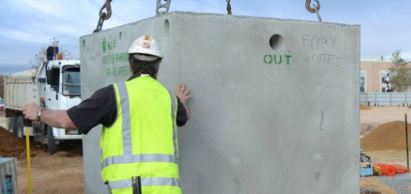
When you think of Ri-Industries, do you think of storage? Do you think of bunkers? Probably not, but you could. You may already be familiar with our reputation in precast concrete tanks used for waste water treatment systems, septic systems, and rainwater tanks. Now you can get to know us for some other uses.

We wrote about some of the unique uses for our tanks a while ago. If you read that blog, you will see pictures of concrete tanks being used as a base of a sculpture and even as a plunge pool. It also talks about using the concrete tanks for shelter and storage. We thought now might be a good time to elaborate on these, as we are seeing an increasing trend amongst our South Australian customers for underground cellars and bunkers.

The political and environmental climates of the world have created a larger interest in underground storage and underground bunkers.  We can custom design features to suit your requirements, just as we have done for a customer in the Tea Tree Gully area. He used one of our precast concrete tanks as an underground cellar. We custom-made a lid for the tank and the customer added a staircase for easy access. It’s been our experience that people living in the metro area tend to use the concrete tanks as an underground cellar, while residents of the Adelaide Hills tend to use the concrete tanks as storage to protect belongings from fire.

What might someone place in underground tank? Some items might be:

  • Important documents
  • Family heirlooms
  • Clothing
  • Cash, credit cards
  • Food
  • Blankets
  • Camping equipment
  • Computer hardware/software
  • Wine

In bushfire prone areas, our customers really are thinking ahead by using underground concrete tanks as bunkers.  What peace of mind you will have knowing that the documents you need to recover from a disaster are safe and accessible along with some clothing and cash to get you by. It is always so heartbreaking to see news footage of people coming back to their home destroyed by flood or fire and watch them sift through the wreckage trying to salvage precious family mementos. Concrete tanks really can help.

Please call us (08 8444 8100) to learn more about using precast concrete tanks for underground storage, cellars or bunkers. We look forward to hearing from you.

Achilles Supply Chain Community Member

by Ri Industries

As a pre-cast concrete manufacturer, Ri-Industries does a lot more than manufacture septic tanks, waste water treatment systems and rainwater tanks.  We also provide concrete products to a wide range of businesses in the mining, oil, gas, engineering and construction industries.

For a business to decide to work with Ri-Industries to complete a project, we understand that we must first prove that our products and service are worthy. This can be a time consuming and frustrating task for both sides. To save time and effort for everyone, Ri-Industries is pleased to announce that we are now an approved supplier on the Achilles supply chain community.

Achillies supply chain communities

Supplier number 193731

Achilles is a leading provider of supplier risk management services. Suppliers undergo a strenuous pre-qualification program before they are granted a stamp of approval by Achilles. Buyers and suppliers agree to use one standard supplier questionnaire which eases the pre-qualification process for everyone involved.

Ri-Industries understands that companies are under pressure to maintain strong compliant supply chains that satisfy:

  • Regulation
  • Legislation
  • Their company’s own policies and standards

The Achilles questionnaire simplifies this process and the buyer can trust that the supplier has been fully vetted.

We are proud to be included in the Achilles supply chain community.  This, along with our recent TQCSI certifications in Quality, Safety and the Environment give all our customers peace of mind that we are focused on the highest levels of quality and service standards.

To discuss any projects that require pre-cast concrete, please contact us at 08 8444 8100.


Can I Flush This Waste?

by Ri Industries

There is a common misconception that toilets are designed to handle any type of waste. The truth is, just because it’s rubbish doesn’t mean it should be flushed!

While it may be fast and easy to simply flush unwanted matter down the toilet, remember, it does in fact flow somewhere, which in many cases is a septic tank. This means that some matter may turn this fast and easy solution into a big, messy problem!

Septic tanks are designed to break down organic matter. When matter is unable to be broken down, it may clog or damage the system resulting in costly repairs.

Here is a list of items which are frequently flushed, but shouldn’t be:

  1. Bathroom wipes – Wait, what? It even says right on the package that they’re flushable! Yes, it’s true they are advertised as flushable, but some brands degrade better than others. There is also the issue of how many wipes get flushed. Often, it is the quantity of wipes flushed into the septic tank that causes the problem.
  2. Condoms – This is another biggie we hear about. While the toilet may seem like an easy, even natural, disposal method, it is not a smart one. Condoms do not break down and will in time clog the system.
  3. Nappies – While they are filled with waste which can be safely flushed, the nappies themselves absolutely should not be. They are made from materials which are intended to expand when they come in contact with liquid, such as ….. toilet water! The problem here may occur before the nappy even makes it to the septic tank. Most likely it will get caught on the way down.
  4. Cat Litter – This follows the same line of thinking as nappies. It might seem a natural step to flush away the cat’s waste, but along with the waste goes clay, sand, toxin, and parasites that we never want in water systems.
  5. Prescription Medications – People often assume this is the smartest disposal method for prescription medications as it eliminates the concern that the medicine may be taken by someone it wasn’t intended for. Unfortunately, by flushing the medicine, groundwater gets contaminated.

This list is by no means comprehensive. The bottom line is that septic tanks are designed to handle human waste. Anything else should be placed in the rubbish. Ri-Industries are happy to discuss the do’s and don’ts of flushing. Should you have any questions, please call us at 08 8444 8100.

Helpful Household Cleaning Tips: Bathroom Edition

by Ri Industries

Ri-Industries has shared many helpful tips over the years. We’ve offered tips for “green” cleaning, how to care for septic systems, which items should not be flushed down the toilet and more. Today, we share more helpful household cleaning tips.

“I LOVE cleaning the bathroom,” said no one ever! Let’s face it, even for those of us that enjoy cleaning our homes, it’s really difficult to enjoy cleaning the bathroom. No matter how tidy family members are on a daily basis, the bathroom will still be germ-laden. The possibility of your hands coming into contact with something undesirable is rather high. Plus, it often seems that no matter how hard you scrub or how strong the cleaner is, there are just some areas that will not get clean.

Well, we searched the internet for helpful household cleaning tips to make your bathroom sparkle and found the following tips by the experts at Absolute Domestics:

  1. Keep your toilet clean and fresh by scrubbing the inside bowl with toilet cleaner, white vinegar or bi-carb soda.  You may want to leave this to soak for a few minutes beforehand. Give a good old scrub with the toilet brush, then flush, rinsing off your toilet brush when flushing.  Give both sides of the lid and outside the toilet a wipe over with anti-bacterial cleaner paying attention to the flush button and bottom of the toilet which often get missed.


  1. When you regularly use your bathroom, you’ll often end up with hard water stains on your bathroom taps. These hard water stains can be removed with lemon. Simply rub a fresh lemon over the water stains and not only will shine, it will smell nice too!


  1. Shower scum is made up of mineral deposits (usually calcium and carbonate) and soap scum. To get this off your shower without chemicals use White Magic Eraser or White Vinegar. Simply put white vinegar into a spray bottle and spray onto the shower door, scrub the mixture on the shower screen with and old pair of stockings or a soft bristled brush. Yes you heard right, the denier in stockings gives you that bit of added oomph rather than using a harsh scourer that can etch or scratch your glass. Rinse off with warm water. Squeegee off the excess water and dry with a microfibre cloth or soft towel.

There you go. Three simple tips to help make your bathroom sparkle!

Our other blogs at Ri-Industries contain lots of other tips, or give us a call at 08 8444 8100.


Ri-Industries Now Distributes FujiClean Wastewater Treatment Systems

by Ri Industries

In order to provide the best options for each of our customers, Ri-Industries is pleased to announce we are now a South Australian distributor of FujiClean wastewater treatment systems. Fibreglass domestic wastewater treatment systems from FujiClean offer an affordable, reliable option for homeowners needing a smaller wastewater treatment system, or where site access is difficult.

Just like our proven Ri-Treat system, the FujiClean CE-1500EX domestic model efficiently converts household wastewater from your kitchen, bathroom and laundry into safe, clean water for re-use around your garden.

FujiClean wastewater treatment system

These fibreglass tanks are a lightweight alternative to our Ri-Treat concrete tanks, and offer the following advantages:

  • Proven design and high performance
  • Simple maintenance and high energy efficiency
  • An environmentally friendly design, resulting in lower operational cost
  • Ease of installation in locations where access is difficult or limited
  • A warranty of 15 years for tanks and 2 years for electrical components.

Why do we feel so strongly about wastewater treatment? Water is a limited resource that is in constant recirculation over time. The water we use today will, eventually, make its way back into our lives tomorrow. Water conservation is vital to ensure our planet has the resources it needs in the years to come.

More information on the FujiClean wastewater system can be found on our website.

If you’d like to learn how a FujiClean wastewater system can benefit your home, please call us at 08 8444 8100.


Ri-Industries’ New Certifications!

by Ri Industries

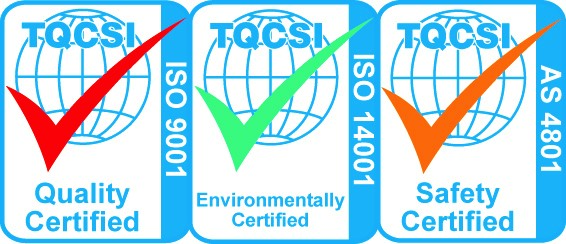
Quality is of the utmost importance to us so we are honoured to share that Ri-Industries has formally been approved for certification by the Certification Approval Panel of TQCS International in three categories.
TQCS International is a fully accredited, third party certification body providing a number of certifications. Customers can be assured that a certified company is meeting or exceeding international standards.

Ri-Industries certifications include:
• AS 4801: Safety – Demonstrating compliance with internal and external safety systems, including performance, preventive measures and monitoring.
• ISO 9001: Quality – Recognising our compliance in areas including client liaison, internal communication, issue resolution and efforts toward continuous improvement.
• ISO 14001: Environment – Acknowledging our commitment to preserving the environment and preventing pollution.


The certification process is thorough and approval is not easy to achieve. We would like to thank our employees for their dedication and commitment to following strict procedures which ensure we continue to provide safe and quality service to our customers.

Learn more about our certifications, services, and products by calling 08 8444 8100.

Tips for Healthy Septic Tanks

by Ri Industries

There are few things more unpleasant than non-functioning septic tanks. The cost of repair, the inconvenience, and oh …. the smell! No need for excessive worry because maintaining healthy septic tanks can be fairly simple once you are armed with some knowledge. Ri Industries has gathered such knowledge to share with you:

  • Do not overload your septic system
  • Use water sparingly
  • Do only full dishwasher loads, and full washing machine loads, at off-peak times if possible
  • Do not put kitchen grease down the drain
  • Do not flush cigarettes, feminine products, disposable nappies, or other inorganic materials down the toilet
  • Do not put petrol, oil, anti-freeze, paint, paint thinner, pesticides, etc., down the drain
  • Do not flush medicines
  • Only use cleaning products approved for septic tanks
  • Check all plumbing fixtures for leaks.

Learn more about maintaining healthy septic tanks by calling Ri Industries on 08 8444 8100.

Septic Tank FAQ’s

by Ri Industries

Ri Industries Septic Tank FAQ's

Maintaining a residence or commercial building is a big expense and takes a lot of time. We expect to routinely dust, vacuum, wash floors, garden, and more. Then there are items that we assume are working in the background and will be there for us when we want them: such as electricity and plumbing. Septic tanks fall into that category. We hope once they are installed, they will reliably do their job as we ignore it and go on with our daily lives. The good news is that can almost be true. With some knowledge and maintenance, your septic tank should serve you well with little effort on your part. Ri Industries has collected some of the frequently asked questions by our customers so we can share the helpful answers to keep your septic tank running smoothly.

How often should my septic tank be pumped?

For an average family of 4-6 people your septic tank may have to be de-sludged (pumped out) approximately every 4 years as required by regulations.

Are there materials we should avoid putting in the septic tank?

Septic tanks do not like materials that will not break down e.g. plastic bags, tampons, disposable nappies, condoms, etc. Use biodegradable products whenever possible.

What cleaning products are safe for the septic tank?

The bacterial action of your septic tank can be severely inhibited if excessive amounts of disinfectants are used. Only use products approved for use in septic systems.

Is it safe to flush medicines?

As with certain cleaning products, excessive amounts of medicine can inhibit the bacterial action of the septic tank. It is best not to flush medicines.

I noticed some pooling around the area of the septic tank. What does this mean?

Pooling of effluent near your seepage trench will give you a warning that the system may be clogging up.

With just a little bit of care and maintenance, your septic tank will be one of the items in your home that requires little action on your part. To learn more or ask questions, call Ri Industries on 08 8444 8100.


To Bidet or Not To Bidet?

by Ri Industries

Bidets are often thought to go hand in hand with the ultra rich, but in recent years environmentalists have sparked a debate over the benefits of bidet usage. Ri Industries would like to offer some of the points of discussion to help you get to the, ahem, bottom of the issue and decide for yourself if using a bidet fits in your environmental plan.

Perhaps your first thought is, wait a minute! Australia has a dangerously dry climate and we work so hard to conserve water. Why on earth would I add water to a dry process that has worked just fine for me? Well that’s a reasonable question. Obviously, using a bidet will increase the amount of water used during each trip to the bathroom, but there are many factors which show using a bidet may actually result in less overall water usage.

Before we expand on the water usage, let’s discuss saving the trees. What? When did trees enter our bathrooms? Trees are wrapped around that spindle in the form of toilet paper. Think about how much toilet paper you use on a daily, weekly, monthly basis. Now multiply that by the number of people in your household, your city, etc. We use a lot of toilet paper. There have been many studies to learn exactly how much and the consensus is that each person uses approximately 1 – 2 rolls of toilet paper per week. That means 1 person uses about 100 rolls per year. 1 pine tree can produce 2000 rolls or enough toilet paper for 20 people per year. In 2015, Australia had an estimated population of 23.9 million people. 11,950 trees will be sacrificed for Australians on a yearly basis. What is the bidets impact on this? Complete elimination of toilet paper, or at the least, a reduction in the use of toilet paper. While the bidet will handle the cleaning aspect, some may still want assistance with the drying process. Of course cloth could be used, but again, some may prefer using something disposable.

So it seems rather clear that using a bidet can reduce paper waste, but let’s go back to water waste. How does a bidet save water if it in fact introduces more water into the bathroom process? The answer brings us back to toilet paper. What you may not realize is just how water intensive the paper manufacturing process is. According to mnn.com, “Even if water used by a mill is locally sourced, rather than drawn from a municipal system, the effluent from paper production invariably finds its way back into the environment. That means a flood of organic waste and chemical residue which must be processed or, worse yet absorbed, after being treated and dumped into some unlucky river or ocean.” Bidets use a fraction a the water used to manufacture toilet paper; even less than manufacturing recycled toilet paper.

These are two of the major points in the debates about the environmental impact of bidets. What are your thoughts? Would you be comfortable using a bidet if it made a positive impact on our environment?


Septic System Start Up Suggestions

by Ri Industries

Congratulations on installing a brand new septic system! You’re ready for things to flow smoothly, but if you are like many of our customers you may be wondering if there are any special steps you should take when first using the septic system.

People talk about priming, prepping, or kick starting a new septic system. Since bacteria in the septic system naturally breaks down organic waste matter and slows the accumulation of the sludge layer, there is a common belief that materials should be introduced to kick start the growth of bacteria. People have been known to place a dead possum or sheep in the septic tank as well as buttermilk.

You may be happy, and relieved, to learn that this is not a necessary step. The natural sewage which flows into the septic system as soon as it is installed provides plenty of nutrients for the bacteria to do its job.

After Ri Industries installs a new septic system, we do recommend one little extra step be taken. Fill the tank with clean water and then add a cupful of lime to the toilet once per day for seven days. The lime prevents odours and increases the pH or alkalinity which encourages the growth of the good bacteria wanted in the septic system.

Call Ri Industries at 08 8444 8100 and we will be happy to answer all of your septic system questions.


How to Spot Problem Signs in Septic Tanks

by Ri Industries

Would you know if your septic tank wasn’t working properly? Would you be able to read the signs before the problem grew? Because it stinks when a minor issue turns into a big emergency, Ri Industries want you to be aware of problem signs in septic tanks.

The following excerpt has been taken from Health.gov.au:

The septic tank will need to be checked if there are signs that it is not working properly.

Some signs that a septic tank is not working properly are:

  • The sewage in the toilet or the liquid waste from other fixtures flows away very slowly
  • Liquid waste overflows from the disconnector trap
  • Wet areas are seen at the top of the septic tank
  • There is a strong unpleasant smell near the septic tank
  • The grass around the tank is very green and growing well

In the case of on-site disposal systems, it is important to remember that some of these signs may indicate problems with the leach or French drain. Therefore, these drains will need to be checked at the same time as the septic tanks are checked.

If the septic tank and the leach or French drain need to be pumped out, both should be done at the same time.

Ri Industries adds the following:

  • For an average family of 4-6 people your septic tank may have to be de-sludged (pumped out) approximately every 4 years as required by regulations.
  • Septic tanks do not like material that will not break down e.g. plastic bags, tampons, disposable nappies, condoms, etc. Use biodegradable products whenever possible.
  • The bacterial action of your septic tank can be severely inhibited if excessive amounts of disinfectants or old medicine make their way into the tank. Only use products approved for use in septic systems.
  • Pooling of effluent near your seepage trench will give you a warning that the system may be clogging up.

Proper maintenance can help avoid unexpected and costly repairs. To learn more, call us at 08 8444 8100.