Preparing Your Septic Tank for Colder Weather

by Ri Industries

It was a brutally hot summer, but we made it through and are being rewarded with cooler temperatures now. As the days and nights continue to grow colder as we move through Autumn, it’s time to prepare your septic system to work its best during the long winter months. Let’s discuss tips to prepare your septic tank for the colder weather.

  • Get Pumped! Septic tanks don’t need to be pumped every year, in fact on average they should be pumped every 3 – 5 years, but if this is the year that yours should be pumped do it before it gets too cold outside. Colder temperatures mean the ground becomes more difficult to break through and accessing your tank is therefore more difficult
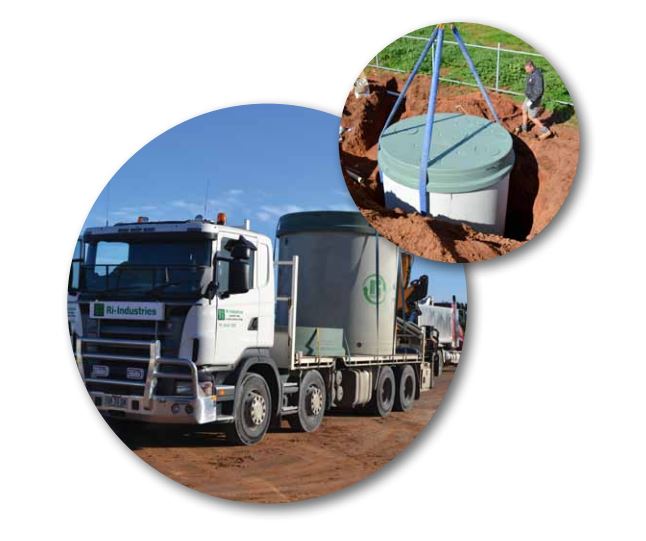
  • Inspection Time! Locate the lid of your septic tank and inspect it for cracks and/or holes. A secure lid is imperative to keep small animals, debris, and even children from getting inside the tank. Plus, we want to trap heat inside the tank because there is resident anaerobic bacteria in the septic tank that break down the solid waste materials and treat the raw wastewater that your household produces. The heat maintains a high level of metabolism among the bacteria. Ri-Industries offers stand-alone child-proof and vandal-proof concrete lids for our tanks should you need a replacement.
  • Protect! The drainage field around the septic tank should be protected during the cold months since freezing temperatures and frozen ground can cause damage. Insulate the drainage field by covering it with a layer of mulch a couple of inches thick.
  • Use It! Regular use of the septic system is important to keep things moving properly. Normal, everyday household use is typically sufficient. If you plan on being away during the winter months, arrange for someone to stop by and make sure your septic system gets some use.

That’s all there is to it! Just a few simple steps to help protect your septic tank and keep it working properly for you throughout the colder winter months. Of course, if you have questions or find you need a new septic tank, please call us at 08 8444 8100.


Wastewater Treatment Systems Help Conserve Water in the Home

by Ri Industries

Ri-IndustriesWhen rainwater is scarce, it’s important we look for ways to conserve. As we stated in our blog Times Are Dry, Adelaide recently reported its driest January since 1957. In that blog we offered helpful tips to conserve water around the home. One additional tip is to install a wastewater treatment system such as the Ri-Treat Wastewater Treatment System.

What is a wastewater treatment system? It is a system designed to treat the wastewater produced in your home to be clean enough to water the garden. Most homes in South Australia use potable (drinking) water for every household task. A wastewater treatment system allows the household to conserve the potable water, at least in terms of what you’d normally use to irrigate the garden.

What makes the Ri-Treat Wastewater Treatment System unique?

  • A mono cast 50 MPa reinforced concrete construction, with no fibreglass or plastic structural components, means that no untreated effluent will escape into the environment.
  • The high quality bio filter medium enhances the purity of the recycled water.
  • All irrigation pumps are submersible, quiet, reliable and inexpensive to operate.
  • The Japanese Air Pump offers the most reliable and efficient aeration and has a 2 year warranty.
  • Ri-Treat tanks come in three sizes, offering maximum flexibility and even allowing for an internal spa bath.
  • Child-proof and vandal-proof lids give you additional peace of mind.
  • A high quality irrigation kit for more effective irrigation.
  • The septic tank is sealed as an additional precaution.
  • A manufacturers warranty on tank construction.

For homes needing a smaller wastewater treatment system, or where site access is difficult, Ri-Industries is proud to offer FujiClean Fibreglass Tanks. These fibreglass tanks are a lightweight alternative to our Ri-Treat concrete tanks, and offer the following advantages:

  • Proven design and high performance
  • Simple maintenance and high energy efficiency
  • An environmentally friendly design, resulting in lower operational cost
  • Ease of installation in locations where access is difficult or limited
  • A warranty of 15 years for tanks and 2 years for electrical components.

If you’d like to learn more about either of the wastewater treatment systems offered by Ri-Industries, please call and speak with one of our experts at 08 8444 8100.

Is Your Septic Tank Ready for Summer?

by Ri Industries

Summer is on the way and for many of us that means frequent house guests and lots of time spent outdoors. After many long cold months of being cooped up indoors, we can’t wait to step outside and take deep breaths of fresh air while enjoying the beautiful landscape of our home with our friends and family. One kink that might ruin that plan is a septic tank with a problem.

What are some signs that your septic tank may need maintenance?

  • contaminated tanks
  • untreated sewage discharge
  • soft smell spots
  • pooling water
  • slow drains
  • an overly healthy lawn
  • heavy rainfall

Did rainfall surprise you? Heavy rainfalls can cause the water table to rise. When the water table rises too high, it can saturate the septic tank’s soakage field which can cause contaminants to back up into the septic tank. So, when there has been heavy rain, take steps to put less stress on the septic system. For example, flush the toilet less, take shorter showers, and do less laundry. These are important tips to remember especially when you have guests staying with you and therefore the toilets, showers, laundry, etc. are used more. Also, divert water flow away from the area of the septic tank. Keep the soil around the septic tank from getting too saturated.

One more tip, watch how you mow your lawn! The drains that feed your septic system are buried underground, but not that deeply. A heavy riding mower and an improperly set mowing blade could damage the septic lines causing a dangerous backup in the septic system.

It is best to take preventative action to avoid major problems with the septic system so follow the recommendations for best care practices and be familiar with warning signs that maintenance may be needed. Questions?  Call Ri-Industries , 08 8444 8100, and we’ll be happy to help!

Garden with Less Water Using the Ri-Treat Waste Water Treatment System

by Ri Industries

As the weather warms, many of us experience a condition where our thumbs begin to turn green, the outdoors beckons, and the dirt calls us to dig in and get planting. If you love to garden, or simply love to have a green lawn, it’s a given you will spend ample time watering your property.

Did you know that an average Australian household will use 40% of its water in the garden? This makes the garden a prime location for water-saving techniques. Here are a few suggestions:

  • Install a dripper system and only water during the permitted hours.
  • Use mulch to prevent water loss through evaporation and prevent soil erosion.
  • Plant your garden in watering zones. Group plants that require large amounts of water together to reduce your water use.
  • Choose a drought resistant lawn.
  • Don’t over water your lawn – train it to use less water by encouraging the roots to grow deeper. Let grass grow longer in summer months which will shade the soil surface and reduce evaporation loss.
  • Don’t water during windy weather – water will blow away from where it’s needed most.
  • Instead of hosing, use a broom or rake to clean paths, paved areas and patios.

Another great tool to help reduce water waste is our  Ri-Treat Waste Water Treatment System. The design is unique to Ri-Industries and guaranteed to be of superior quality.

Choosing a Ri-Treat waste water treatment system gives you a number of advantages:

  • A mono-cast 50 MPa reinforced concrete construction, with no fibreglass or plastic structural components, means that no untreated effluent will escape into the environment.
  • The high-quality bio-filter medium enhances the purity of the recycled water.
  • All irrigation pumps are submersible, quiet, reliable and inexpensive to operate.
  • The Japanese Air Pump offers the most reliable and efficient aeration and has a 2-year warranty.
  • Ri-Treat tanks come in three sizes, offering maximum flexibility and even allowing for an internal spa bath.
  • Child-proof and vandal-proof lids give you additional peace of mind.
  • A high-quality irrigation kit for more effective irrigation.
  • The septic tank is sealed as an additional precaution.
  • manufacturers warranty on tank construction.

The operation of the unit has other unique features, such as automatic sludge and skimmer returns.

So go ahead and grow a luxurious lawn and lavish garden! Enjoy the fruits of your labour because Ri-Industries can help eliminate any guilt you might feel from the amount of watering needed to keep your garden beautiful. Call us to learn more about the Ri-Treat Waste Water System at 08 8444 8100.

Why Use Pre-Cast Concrete?

by Ri Industries

Ri-Industries has been specialists in pre-cast concrete products since 1947. We think that’s impressive! We’re hoping you will think that too, especially once you fully understand what pre-cast concrete is.

Regular concrete, or insitu or site-cast concrete, is poured on site. In contrast, high quality precast concrete is produced in a controlled factory environment using advanced manufacturing techniques. Reusable, reinforceable, and adjustable moulds are used and they are set up per design specifications before the concrete is poured in. Then the concrete is poured, vibrated, and cured. If specified, architectural finishes (such as honing, polishing or staining) may then be applied while still in the factory. From there, the finished pre-cast elements are transported to the site and craned into position.

By manufacturing the concrete in a factory, we are able to do all the pre-checks before products get delivered to site which gives us increased quality control over insitu concrete. Dimensional accuracy, properties of the hardened concrete and position of reinforcement can all be checked before being sent to site.

Pre-cast concrete is extremely versatile. For example, we use it to make septic tanks, waste water treatment systems and rainwater tanks. It’s also safe for indoor use since it doesn’t require any chemical treatment.  We also work regularly with civil engineering and construction companies to provide tailored pre-cast concrete solutions, such as bridge parapets, arch tunnels and retaining wall panels.

One of the great benefits of pre-cast concrete comes at the construction site. Unlike insitu concrete, there are no worries about weather delays. We can avoid a lot of headaches and hassles with this one. Because the tank is already formed in our factory, we can crane it into position during a rainy day just as we can on a sunny day (providing the rain hasn’t caused any access problems for our trucks). By manufacturing pre-cast concrete products in a factory, this also means that you can get the same results each time, as the weather will often affect the outcomes of concrete being poured on site.

On site, precast can be installed immediately, there is no waiting for it to gain strength and the modularity of precast products makes installation go quickly. With the ability to so tightly control the process, from materials to consolidation to curing, you can get extremely durable concrete.

These are just some of the reasons we are proud to be pre-cast concrete specialists.   What projects can we complete for you? You can see some of our work on our website , but better yet, give us a call at 08 8444 8100.


Which Toilet Paper is Best for my Septic System?

by Ri Industries

You may not realise that sense of satisfaction when you flush the toilet and see the smooth flow of water down the drain until the moment when you flush and feel a sense of dread as you watch the water rise towards the top of the bowl. The instant moment of panic as you realise the toilet is clogged and will likely overflow at any moment. Clogged toilets can cause a lot of damage. This is something you already know. What you might not know, is that the type of toilet paper you are using may actually be the culprit!

While people may think about what is and is not OK to flush down the toilet, toilet paper surely makes every ‘ok’ list out there. What most people don’t know is that soft and thick varieties of toilet paper could create problems for your septic system because they don’t dissolve quickly. Of course, the amount of toilet paper should also be watched. Flushing excessive amounts of toilet paper at one time can also be major contributors to problems and clogs.

The good news here is that the fix is simple and within your control. Only flush small amounts of toilet paper at one time and research the type of toilet paper you use. What’s the best type of toilet paper to buy? Paper that is soft, strong, and most importantly for your septic system, dissolves quickly. There’s even a fun little test you can do at home to check the toilet paper you choose before you flush. Test the paper by soaking it in water for 30 minutes and see how much it breaks down. The more it breaks down the better.

Properly functioning septic systems are important for your home and can be expensive to fix or replace. Taking control when and where you can will help keep your septic system running smoothly for many years to come. Questions? Call Ri-Industries at 08 8444 8100 and we will be happy to help you.

Water Your Garden AND Conserve Water

by Ri Industries

Do you want a beautiful garden but worry it might conflict with your desire to conserve water? We say you can have your garden and conserve water with the Ri-Treat Waste Water System!

You deserve to have beautiful things in your life while feeling good about caring for our environment. The following tips will help you make smart choices when watering your home garden.

  1. Use Ri-Treat to irrigate your garden

The Ri-Treat Waste Water Treatment  System works to clean and re-use your waste water from the toilet, kitchen, and laundry to irrigate your garden. Ri-Treat features a high quality irrigation kit for more effective irrigation. This system is certainly a cost-efficient and environmentally friendly way to keep your garden looking green and healthy.

  1. Water your garden only when it needs it

While the Ri-Treat system can efficiently recycle your waste water for your home, it’s up to you to decide when your garden needs watering. To find out if your lawn needs water, use this rule of thumb: stick your finger about 4 cm into the soil, and if the soil is not moist, it is time for a shower.

  1. Water less often, but with gusto

Flower beds do well with just one or two watering sessions per week as long as it is a thorough watering.

  1. Water when cool

Plan to water during evening or early morning hours when the soil is cool. Less water will evaporate than during the heat of the day, allowing the plants to retain sufficient water.

  1. Dry leaves are healthy leaves

When kept wet overnight, leaf mold may form on leaves.  Leaves that are left wet during the hot daytime hours may develop slight burn marks.

  1. Put your garden on a schedule

For those of us who do not have time to stick our finger in the soil every day, it is recommended to water your garden deeply and infrequently (about 2.5 cm a week). But how do you measure how much water your lawn is soaking in? For this you can use a rain gauge or a cup of water placed on your garden and a ruler. Run your irrigation system for about 15 minutes, check the amount of water left in the cup or rain gauge, and you can do some quick calculations to find out how much water per hour is coming from the sprinkler.

So, go ahead and enjoy a beautiful garden at home while doing your part to conserve water. Have questions about the Ri-Treat Waste Water System? Give Ri-Industries a call at 08 8444 8100 and we’ll be happy to answer your questions.


Gardens Over Septic Tank Soakaways

by Ri Industries

When planning a garden, you may not think about your septic tank, but maybe you should. More specifically, you need to understand the do’s and don’ts of planting in or around your septic tank soakaway, also known as a soakage trench or drainage field.

First, what is a septic tank soakaway?

A septic tank soakaway is a series of underground, perforated pipes that allow septic tank effluent to soakaway over a large area. Excess nitrogen and phosphorus is removed from the effluent as it is purified by the soil. Plant roots can help your septic tank drain system work better by removing moisture and nutrients which in turn help the soil work more efficiently.

What should you plant over a septic tank soakaway?

Deep roots can damage soakaways, so shallow rooted plants are ideal for this area. A septic tank is generally installed about 0.6 to 0.9 meters underground, meaning you do not want the root systems of your small plants or shrubs to extend below this depth. The best plants to use near drainage fields are flowers, grasses, and small groundcovers that will not grow deep enough to disrupt the pipeline of your septic tank.

While Ri-Industries septic tanks are made from 40 MPa concrete, and the engineer-designed tanks are built to withstand anything, it is not recommended that anything with deep roots, especially trees, are planted near your septic system.

Tips: when planting, do not dig too deep and be sure to wear gloves to protect against bacteria that may be in the soil.

Dense covering, such as a lawn, is recommended over a septic tank soakaway to help prevent soil erosion.

Planting a lawn or garden over the soakaway is a good way to care for it while adding beauty to your landscape.

If you really must have plants near your septic system, speak with your garden specialist to find out the ph of your soil and choose shallow rooted plants suited to that ph level.  Otherwise, the simplest answer is to plant a lawn over the soakage trench.

For questions about septic tanks, call Ri-Industries at 08 8444 8100.

Ri-Industries Trade Waste Arresters

by Ri Industries

What is Trade Waste? It is liquid wastewater from a commercial or industrial entity that enters the sewer system. Some trade waste must be pre-treated before entering the sewer system. In those cases, trade waste arresters are used to stop harmful trade waste entering the drainage system where it may affect people or the environment. The arresters capture the waste and allow it to settle and separate. The treated wastewater can then safely enter the sewer system while the harmful waste can be disposed of.

Commercial trade waste arresters

Ri-Industries makes several trade waste arresters which meet a variety of needs and offer a multitude of benefits:

  • Made from precast concrete with a strength of 50 MPa at 28 days.
  • A number of different trade waste arresters are available including silt, grease and detention tanks.
  • All inlets suit HDPE pipes for easier connection.
  • Gas-tight lids set in precast concrete can also be supplied, as well as extension risers.
  • Increments and trafficable, gas-tight, heavy duty cast iron/concrete covers are available.
  • Units are lowered into the excavation site providing the site is level, firm and accessible.
  • All units are SA Water approved.

Maintenance is simple as our trade waste arrestors are particularly strong and built to last. The arrester is designed to trap all fats and oils contained in the washwater. Therefore, it should be completely cleaned out at three-monthly intervals or more frequently if necessary, following SA Water recommendations. Tank waste must not be discharged to the sewage system.

More information regarding the Ri-Industries Trade Waste Arresters can be found on our website.  A product catalogue is also available for download for your convenience. Of course, the best way to learn about our products is to call us at 08 8444 8100 and speak to one of our experts. We look forward to hearing from you!

Benefits of Ri-Cycle Commercial Wastewater Treatment System

by Ri Industries

Constructing commercial properties is a huge undertaking. Many factors go into the initial step of choosing locations for building sites. One important consideration is how wastewater will be managed. Are sewage pipes already laid and available for use? If not, is it possible to connect sewage pipes to the area? What will the cost be for off-site wastewater disposal? Is on-site wastewater treatment a possibility?

On-site wastewater treatment can be a major cost saver compared to installing and maintaining sewer pipes. It is also beneficial to the environment. The use of reclaimed water means less consumption of fresh water and when used water is eventually discharged back into natural water sources, it can still have benefits to ecosystems, improving streamflow, nourishing plant life and recharging aquifers, as part of the natural water cycle.

There are a variety of ways reclaimed water can be used for commercial properties. Irrigation of lawns, gardens, sporting facilities, golf courses is a common use. It can be used for road cleaning, soil compaction, concrete making and even dust control.

If the decision is made to use a commercial wastewater treatment system, the Ri-Cycle manufactured by Ri-Industries should be considered. The Ri-Cycle is an aerobic systemand is one of the most effective methods in Australia for dealing with sewage.

With its unique design, the Ri-Cycle wastewater system offers a number of benefits:

  • Flexible design so they can be tailored to suit your exact requirements
  • The high quality bio filter medium enhances the purity of the recycled water
  • All irrigation pumps are stainless steel, submersible, quiet, reliable and inexpensive to operate.  And because of the high quality of effluent being passed through the system the normal manufacturer’s warranty of 12 months is extended to 3 years
  • A German-manufactured side channel Air Pump offers a reliable and efficient aeration
  • Three sizes of Ri-Cycle tanks offer maximum flexibility for use in many buildings and sites
  • Child-proof, vandal-proof and trafficable lids give you additional peace of mind
  • A manufacturers’ warrantyon tank construction – longer than comparable products

Please call us at 08 8444 8100 to learn more about the Ri-Cycle. Our experts will be happy to assist you.

Exciting Times for Ri-Industries!

by Ri Industries

It’s exciting times for us at Ri-Industries! Our business continues to grow through the hard work and dedication of our staff, our commitment to long-term relationships with our partners, and of course, loyalty and support from our customers. We are pleased to share the following news with you.

Congratulations to Ivan Sayers for his recent promotion to Managing Director. Ivan began his journey with Ri-Industries in 2002 as Production Manager and became General Manager in 2012. We are excited for Ivan to take the helm as Managing Director and look forward to following his lead as we bring additional value to our community.

Ri-Industries continues to work on South Australian infrastructure projects, including the Darlington Upgrade, along with our partner Reinforced Earth. Not only does this work improve South Australian infrastructure, but it keeps South Australians employed right here in SA. Our factories will be kept busy over the next 12 months.

Ri-Industries has worked closely with our partner Xylem Water Solutions on an exciting development: releasing a new product into our production of an elliptical-shaped station. This pump station comes from a long-term project to manufacture an alternative shaped-station that ensures logistics are easier, but still provides a capacity equivalent to a 3800 internal diameter.

South Australian customers are benefitting from our continued relationship with FujiClean.  We provide a lightweight alternative waste water treatment system that adds to our already extensive range of environmentally-focussed products. Ivan recently visited the FujiClean headquarters in Japan to further develop our relationship.

South Australia is introducing new certifications required for waste water treatment systems and we are busy getting ready for them. In fact, we are already working with key partners on the certification process for Ri-Treat and Ri-Cycle.

We would like to thank all of our customers and contacts for your continued support. If you’d like more information on any of these updates, or our products, please call us on 8444 8100.


How Do Sewage and Effluent Move Through Septic Systems?

by Ri Industries

Safe disposal of sewage and effluent is essential to protect the health of the community. Why? Sewage and effluent can contain a variety of human disease-causing microorganisms and parasites which can be spread to humans by direct contact or indirectly by consumption of contaminated food or water.

In most unsewered developments across Australia, septic tank systems are used to treat and dispose of sewage, also referred to as wastewater. The government of Western Australia has provided a rather simple explanation of how septic tank systems work which apply to South Australia as well:

“When wastewater passes through the septic tanks, heavier solids sink to the bottom and undergo bacterial digestion. This reduces the quantity of solids and also changes its composition to sludge, which builds up in the bottom of the tank. Materials such as grease and oil float to the surface in the tanks to forma crust over the liquid. The remaining liquid, called effluent, flows from the tanks into the drainage receptacles to soak into the surrounding soil where it may undergo further natural treatment processes.”

Also from the Government of Western Australia come tips for a healthy efficient septic tank system:

  •  Have the septic tanks pumped out regularly.
  •  Allow as little fat or grease as possible into the system.
  •  Minimise and stagger water usage.
  •  Regularly switch the drain or soakwells in use if you have an alternating system.
  •  Do not dispose of non-biodegradable materials into your septic, e.g. plastics.
  •  Do not dispose of old medicines, large amounts of disinfectant (biocides) or other strong chemicals into the septic tank. These can kill the normal bacteria and interfere with the system. Bleaches and detergents have no adverse effects when used in moderation.
  •  Do not drive vehicles over the system.

Of course, Ri-Industries can answer all your questions on how septic tank systems work, problems that may arise, and how to maintain septic tank systems for best use. Call us with your questions or to learn about the products we sell. 08 8444 8100