What Happens When a Septic Tank is Pumped?

by Ri Industries

What happens when a septic tank is pumped? What is the process and where do the contents go? If you own a property that has a septic tank, you may be curious.

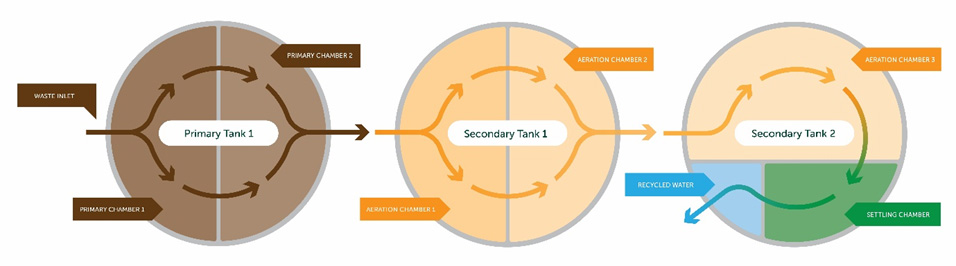
First, let’s quickly recap how a septic tank works. Simply put, septic tanks allow for the safe disposal of certain household waste products. Wastewater flows down through the sewer pipes in your home and enters the first chamber of the tank, allowing solids to settle (sludge layer). A crust then forms on the surface of the effluent, known as the scum layer. The settled solids are anaerobically digested, reducing the volume of solids. The liquid component flows through the dividing wall into the second chamber, where further settlement takes place, with the excess liquid then draining in a relatively clear condition from the outlet into the soakage field. To learn more, see our articles How a Septic Tank Works and How Do Sewage and Effluent Move Through Septic Systems?

Soil, sludge, excrement and solid waste will build up in the tank over time, eventually requiring the tank to be pumped to make room for more waste to be added. Waste disposal companies begin the pumping process by emptying the tank and removing all the solid waste that has been collected. A tank truck with suction gear, called a gully sucker, collects the waste by sucking the wastewater and sludge from the tank. Once the tank is emptied, the contents will be transported for disposal.

The South Australian government dictates how the contents are to be disposed of. “Septage must either be taken to a facility licensed to receive septage or where this is not reasonable or practicable, applied to land only if for beneficial reuse (for example, in regional locations or small townships).”

We know talking about waste products is not a fun topic, but for those who use septic tanks, this information is important. Knowledge can help keep the septic system running smoothly. For more information on our septic tanks or any of our products, please call 08 8444 8100.

https://www.epa.sa.gov.au/files/8427_guide_septic.pdf

Common Septic Tank Mistakes to Avoid to Keep Your System Running Well

by Ri Industries

Ri-Industries logo and title of article: Common Septic Mistakes to Avoid to Keep Your System Running Well

Septic tank mistakes can be innocently made by homeowners leading to damage and expensive repairs. While you don’t want to think about your septic tank often, a little knowledge and planning can help you keep it in good working order. 

Let’s talk about common septic tank mistakes:

  1. Lack of Maintenance – This is one of the biggest reasons homeowners find themselves with a non-working septic tank. Maintenance is not required often, but should be done on a regular basis. The size and use of the system will factor into how often it should be pumped, but typically it is best to do every few years. 
  2. Toilets Are Not Rubbish Bins –  Rubbish should be properly disposed of, and this does NOT mean flushed down the toilet. Restrict flushing to toilet paper only and the waste that exits in your body. The most common items flushed which should NOT be flushed are feminine hygiene products, baby wipes, toilet paper that is not labeled ‘septic safe’, and nappies.
  3. System Overload – A steady flow of water is best for the septic system. Frequent loads of laundry and exceptionally long showers should be avoided. 
  4. Ignoring Warning Signs – Common signs of trouble include the sink/bath draining slowly, bad odour emanating from the tank or drain field, and spots of healthy/green grass over the drain field. If you see one or more of these, call in a professional. When caught early, repairs may be less costly than if the warning signs are ignored.
  5. Drain Field Care – Waste water gets treated in the septic tank and then it flows into the drain field where it filters through the soil. When the drain field is not properly cared for, the wastewater cannot filter correctly, which can cause it to flow into the groundwater, or back through your pipes and into your home. Don’t build structures or park vehicles on the drain field and avoid overloading the drain field with too much wastewater at once. 

It’s never pleasant to find your septic system not working properly. Avoiding these common mistakes can help you avoid that unpleasantness. If you have questions, please call and speak with one of our experts or you may find the answers in one of our many blogs at https://www.ri-industries.com.au/blog/.


The Homebuilder Grant and Septic Systems

by Ri Industries

HomeBuilder Grant

If you were planning on building a new home or renovating an existing home any time over the past year or so, you’re likely familiar with the Homebuilder grant. The grant provides eligible owner-occupiers (including first home buyers) $25,000 towards the cost of building or buying a new home or substantially renovating an existing home. The application process is now closed, but the construction commencement requirement has been extended for all contracts signed between 4 June 2020 to 31 March 2021, from six months to 18 months. This is great news as  the construction industry is experiencing a shortage of many materials, such as timber and steel. 

What can the Homebuilder Grant do for you?

  • For those who are building a new home in a non-sewered area, Ri-Industries can provide either a soakage system septic tank or an aerobic waste water treatment system such as the EP10. Funds from the Homebuilder grant can be used for this expense. 
  • The Homebuilder Grant can also be used for home renovations such as adding additional bedrooms and/or bathrooms to accommodate more people. When adding more people living in the home or increasing the use of water in the home and you already have a septic tank, it’s a good idea to see if the current septic system is large enough to handle the increased use. If not, it’s time to upgrade the system to a bigger unit or possibly move away from the old soakage system septic tank to an aerobic septic tank, and take advantage of recycling your waste water at the same time.

It’s been a stressful year to say the least and you deserve some upgrades in your life. If you’ve already applied for the Homebuilder grant and are planning the build of your new home or the renovation of your existing home, be sure to consider your septic system needs. The experts at Ri-Industries will be happy to help you choose the best solution for your home. 


Why Rainwater Tanks are Popular and Important in South Australia

by Ri Industries

Rainwater tanks are popular and important in South Australia because they help us conserve water. Let’s look at how they are used and how much water they can save.

In South Australia, rainwater tanks are used in communities without access to reticulated water sources, in communities where good quality water supplies are limited, in areas where local regulations require rainwater storage be provided for bushfire prevention, and in urban areas, such as Adelaide and regional communities, which have access to mains water but owners want to conserve water. 

Some advantages of rainwater tanks include:

  • The use of rainwater costs less than mains water
  • Rainwater causes less erosion to household appliances due to their low salinity content
  • Protects water supplies by conserving mains use
  • Rainwater is softer than mains water which may mean you use less soap, detergent, and shampoo

To read more about the benefits of rainwater tanks, please see our blog, What are the Benefits of Rainwater Harvesting.

One of the main benefits of rainwater harvesting is the ability to conserve to water. So, how much can you save? Put into everyday terms, a family of four in Adelaide, with a 100m² roof catchment area and a 1000L tank can capture enough rainwater in one year to:

  • Flush a toilet twice per day per person

OR

  • Provide one bath per person per week (150L tub)

OR

  • Run a sprinkler system for one hour five days a week (1.5 L/min)

OR

  • Wash dishes in the dishwasher every day

OR

  • Give each person a 5 minute shower twice a week (standard flow shower)

If we’ve piqued your interest in rainwater harvesting and you would like to learn about our rainwater tanks, please see information on our website or call us at 8444 8100.


Rainwater Harvesting Benefits Farming and Agriculture

by Ri Industries

Farming and agriculture play an important role in Australia. Rainwater tanks contribute to their success by reducing their reliance on mother nature.

Farms require an abundance of water to keep their crops and livestock healthy. In Australia, which is known for its dry climate, rainwater tanks Adelaide can help keep the water flowing despite a lack of rain. Another concern of farmers is the outbreak of disease or parasites. When this occurs, it’s in their best interest to have access to their own clean water supply.

Farmers use rainwater harvesting, which is the primary and most efficient component of water supply management for rural and regional Australia, to fill the rainwater tanks. Rainwater that falls on the roofs of houses, sheds, and other farm buildings is collected and stored in tanks. This is an easy way to locally collect water and use it where and when it’s needed.

The collected water can be used in various applications such as feeding stock, spraying crops, and storing water for firefighting. The quality of rainwater is typically superior to water from sources such as dams and local waterways which means it can also be used for domestic use.

Rainwater harvesting is expected to become more popular in the years to come. This is in part due to the cost-effectiveness of rainwater harvesting as compared to setting up main water and sewage services in semi-rural and rural areas. In fact, rainwater harvesting is so cost-efficient that arguments have been made that it should be used more widely in urban areas as well.

The bottom line is that safely storing water in tanks is a cost-effective way to see you through many types of water crises, including drought. If you’d like to learn more about rainwater harvesting and/or Ri-Industries rainwater tanks, we have a range of articles you can read available on our website. Of course, we’ll be happy to take your call to answer questions as well. You can reach us at 08 8444 8100.

Cleaning, Septic Systems, and COVID-19

by Ri Industries

If it seems you’ve been doing an excessive amount of cleaning these past few months, you’re not alone. Worries about COVID-19 have us washing, wiping, and scrubbing more than usual. What can be wrong with that? Cleanliness plays an important role in keeping us healthy, right?

Of course the answer to that question is yes! Keeping our homes and ourselves clean is important to help maintain our good health. But, when it comes to our septic systems, there can be such a thing as ‘too clean’.

Septic tanks need natural bacteria to form because they work to break down solids. They will rid pollutants such as phosphorus, nitrogen and the disease-causing bacteria found in household wastewater. Using an abundance of cleaning materials can disrupt the growth of the natural bacteria which impedes the treatment of wastewater and can result in groundwater contamination which can, in turn, pose a threat to drinking water. 

You may be cleaning more and using antibacterial soaps, antibacterial cleaners, bleach, ammonia, etc. to help keep you and your family healthy. But by using an excessive amount of these cleaners, you risk upsetting the development of the necessary bacteria in the septic system which can then result in contaminated groundwater and drinking water. So, what is the best thing to do? 

The goal is to find a good balance. Cleaning supplies such as the ones we just mentioned are okay to use in minimal amounts. When possible, substitute septic safe cleaners for the harsh chemicals. Read our blog Safe Cleaning Products for Ri-Treat Waste Water Treatment System to learn more about septic safe cleaners, such as vinegar, bicarbonate of soda, soap – in the form of washing powder, dishwashing liquid and ordinary body soap, and biodegradable cleaning liquids.

Harsh chemicals are also often used to unclog drains. Again, in order to help maintain the natural bacteria in the septic tank, try using the methods we share in our blog Unclog Drains Without Harsh Chemicals

We understand staying healthy is on our minds more than usual these days and we want to do all we can to help. If you have questions about safe cleaning products or installing a Ri-Industries septic tank, please call us at 08 8444 8100.


Will COVID-19 Affect the Septic System

by Ri Industries

COVID-19 introduced many concerns into our lives: A new strain of a virus that we were ill prepared to manage; financial worries stemming from forced lockdowns; even short supplies of everyday necessities. One issue that may not have caused concern, is actually something we should think about – septic systems. 

Homes and businesses in rural areas and those without access to the main sewer systems rely on individual septic systems. These systems are designed to function well with ‘normal’ use. When families are forced to remain home, the systems will be put to the test. Increased usage can cause problems for an overworked system. 

Fortunately for South Australia, we appear to have recovered well from the virus and people are returning to normal activities. Still, the septic systems have recently been used more than average and with school holidays happening in July we again will have children staying home. Plus it’s a time for family get-togethers. Additional heavy septic use is on the horizon. 

So, how can you prepare and keep your septic tank working well? Ri-Industries has some tips:


  • Take steps to conserve water. Limiting the generation of wastewater can be an effective step to maintaining the health of your system. Remind people to turn the water off when washing hands, brushing teeth, doing dishes in the sink. Ask for people to limit the amount of time they spend in the shower. Only run the washing machine and dishwasher when they are fully loaded. 
  • Manage the type of waste entering the system. Foods containing fats, oils and flour create waste that is difficult for the sewage system to properly handle.
  • Only dispose of flushable items down the toilet. Read our blog “Is This Safe to Flush?”  for a list of items that should not be flushed.


Septic tanks built by Ri-Industries are well designed and should have no problem handling the extra use, but being mindful and taking some precautions are always a smart thing to do. If you have questions about septic tanks or any of the Ri-Industries products, please call us at 08 8444 8100.

Considerations When Buying or Building a New House

by Ri Industries

Buying or building a new home is exciting, but it can also be a very daunting experience. There are many factors to consider such as number of bedrooms/bathrooms, neighbourhood, design, and more. Those are the fun factors which are a matter of choice. Then there are the structural and functional factors that need to be considered; not as fun, but in some ways, more important.

With so much to think about, you’ll be happy to learn that SA Water has provided some helpful tips on what questions you should ask when buying or building a new home:

  • When having a new home built, check that your builder has applied for water and sewerage connection on your behalf. If your contract with your builder doesn’t include a water and sewerage connection, you will need to apply for a connection.
  • If moving into a newly built home, if there is a connection, but no water meter on the property, you will need to apply for a meter.
  • Is your water meter accessible? Water meters must be kept free of obstructions so they can be read, maintained and periodically replaced. If the meter is partially buried or encased in concrete, you have to remove the obstruction or the meter may be relocated at your cost.
  • Is the property located in a dual water supply development? Prior to sale, each property must be checked to ensure no cross connection exists between the drinking water and recycled water supplies.
  • Is the water connection for the property located away from the property? If so, the property will have a special type of connection agreement. It’s important to note you are responsible for the maintenance and replacement of the water pipe between the meter and the property if repairs are required.
  • Does the property have a sewerage connection? Where is it located?
  • What is the condition of the drains connected to the sewerage connection?
  • Is there an external overflow point on the property? In the event of a blockage, an overflow relief gully may be required. This will allow the discharge to flow from the dwelling.

Are you buying or building a new home and have questions about septic systems? Call Ri-Industries, at 08 8444 8100, for answers.


Avoid Summer Septic Tank Problems

by Ri Industries

Summer is a time to enjoy your beautiful outdoors, entertain guests, and simply …RELAX! Well, there are very few home maintenance issues more stressful and less relaxing than problems with your septic tank. To help avoid any messy issues this summer, Ri-Industries offers these tips for summer septic tank care.

  1. Planning a party or having guests stay with you? That means extra water and waste going through the septic tank. You can help eliminate problems by doing laundry and other heavy water use tasks before guests arrive. If you’re having a big party, consider having your septic tank pumped beforehand.
  2. Which items can be flushed? The answer is very simple – only toilet paper and human waste! Be sure your guests understand this. A helpful sign placed above the toilet may help prevent costly repairs. Common items that cause septic tank problems are:
    *Cat litter
    *Grease and oils
    *Cotton swabs
    *Dental floss
    *Nappies
    *Disposable wipes
    *Feminine hygiene products
    *Hair
    *Cigarette butts
  3. Kids, and adults love to play with water when the weather is hot, running through sprinklers in particular. These are best sprayed away from the septic field to avoid standing water. Identify a separate part of the garden for this play.
  4. Parking can be challenging when you have a lot of people over. Avoid using your lawn to increase the parking area, especially over the septic field. Also, do not ride dirt bikes or go-karts near your septic tank as these also can cause damage.

With just a little forethought, planning, and education, your summer can be relaxing, enjoyable, and free of septic tank problems. If you have questions about Ri-Industries Septic Tanks, please call 08 8444 8100 and we will be happy to help you. Happy Summer!

How to Water Your Garden With Water Collected in a Rainwater Tank

by Ri Industries

Before we discuss how to water your garden with water collected in a rainwater tank, let’s discuss why you might want to use rainwater.

First, rainwater harvesting reduces pollution. When rain falls, oil, pesticides, animal waste and fertilisers from lawns, footpaths, driveways, and streets get washed into our sewers which then overflow into rivers and estuaries. By harvesting rainwater, we eliminate those possible contaminants joining the water. Harvested rainwater is also free of salts, pollutants, and chlorine that are found in ground and surface water.

Second, harvested rainwater reduces demand on our water supplies. This is especially important during the summer months and times of drought.

Now that you have decided to harvest rainwater, how do you actually capture the water? We recommend installing a Ri-Industries Concrete Rainwater Tank. Our underground concrete rainwater tanks offer a number of advantages:

  • The water stays cooler.
  • No algae develops.
  • The water has no after-taste.
  • They are vandal-proof and fire-proof.
  • Being underground means they are out of sight and don’t take up much of your valuable real estate.
  • Concrete is stronger and more durable than plastic, steel or fibre glass.
  • Once the rainwater tank has been installed, you will need to move water from the tank to your garden. The best way to do this is with a pump.
  • Pump systems can be submerged underground or they can be free standing. They can provide enough pressure that the water flows similarly to mains water. You can also install a mains switch-over device to switch from rainwater to mains use when the rainwater runs out.

Another option to consider is having a header tank. This is a great option to use with underground tanks. The header tank will be placed at a higher level than the storage tank. A low-powered pump will transfer the water from the rainwater tank to the header tank, then you can use a gravity fed method to release the water. You can fit a garden tap near to the bottom of the header tank and use a soaker hose to transfer the water out of the tank, using gravity.

Watering your garden with harvested water is a great way to help conserve water and eliminate pollutants. Ri-Industries is proud to provide quality concrete rainwater tanks in Adelaide and surrounding areas for your use. Please call us to speak with one of our experts to learn more.

The Benefits of Xeriscaping

by Ri Industries

Xeriscaping, pronounced “zeer-i-scape,” is defined as ‘landscaping designed specifically for areas that are susceptible to drought, or for properties where water conservation is practiced.’ The term is derived from the Greek word ‘Xeros,’ which means dry, and ‘scape,’ which means scene. Put together, we get ‘dry scene.’

Xeriscaping is a beneficial practice in South Australia as we battle drought or limited rainfall conditions. The Australian Government Bureau of Meteorology puts out a monthly drought report and the latest (June 2019) shows western South Australia once again had below average rainfall. For those of us who want beautiful gardens and/or to help our environment, xeriscaping can be a fantastic solution. 

 What are the benefits of xeriscaping?

  • Reduce water consumption as much as 50 -75%. In fact, if you choose a desert landscape it can eliminate water consumption completely.
  • Limited maintenance is required as mulching and weeding may be all that is required.
  • All natural – by choosing native plants there will be no need for chemical supplements.
  • Reduces pollution because there is no need to use gardening tools such as gas mowers.
  • Creates a wildlife habitat by growing native plants alongside trees, and shrubs.
  • Saves money since there is no need to purchase fertiliser or expensive gardening equipment.

Since the most important aspect of xeriscaping is reduced water consumption, it is important to research the plot of land where the garden will be. Look at the contours of the terrain, soil absorption, and drainage patterns. You want soil that is rich in organic material and you will want to keep it well aerated. Compost is a great way to enrich the soil. 

The goal of the xeriscape is to provide as much of the needed water by rainfall as possible. However, there will be times when additional water will be needed. Consider installing a drip irrigation system from your rainwater tank or simply use soaker hoses. Each of these will deliver water slowly and promote root absorption in your plants and will safeguard against soil erosion. 

Choose native, drought-resistant plants. We have a nice variety of such plants available here in South Australia. Choose a combination of plants you find pleasing to look at and would enjoy. 

Mulching is imperative to help soil retain moisture and temperature as well as help to control weeds. You want to avoid leaving the soil around plants bare. Leaves, wood chips, coarse compost, gravel, bark, and pine needles are all good choices for mulch.

Minimise the turf areas in your garden since they require more watering. Most people choose to include a small turf area for aesthetic reasons. Choose turf from the variety that consumes less water.

It is possible to create a beautiful landscape while conserving water. There are many online resources to help you plan your own xeriscape or there are xeriscape professionals who can plan and create it for you. 

If you would like to learn more about the Ri-Industries concrete rainwater tanksplease call and speak with one of our experts. 

Why Saddle Risers, Increments, and Cover Slabs are Beneficial for Septic Tanks

by Ri Industries

Yay! It’s time to get the septic tank pumped! Wait a minute, that’s not something people get excited about. Let’s face it, while we understand there is a need for a septic tank, it’s not something we like to think about on a regular basis. Once it’s been installed, we’d prefer to put it out of mind.

One good thing about septic tanks is that they are fairly low maintenance. If we follow simple rules about what should not be flushed, the tank should function well without much work on our end. There will come a time though, on average once every three – five years, when the tank should be pumped. Why? Because tanks breed bacteria which digests sewage to a sludge. The sludge builds up over time eventually leaving little room for new sewage. If not pumped, sewage will overflow into the disposal area causing it to fail. Failed disposal areas can be smelly and expensive to fix. So, when the time comes to pump the septic tank, we want it to be as inexpensive as possible and cause the least disruption to the landscaping as possible.

A common problem faced by septic tank maintenance companies is difficulty locating the tank. Sounds a bit funny, doesn’t it? But the tank is, after all, underground and it’s likely there have been years to develop beautiful landscaping around it. Wouldn’t it be awful if every three – five years the landscaping had to be destroyed simply to find the septic tank?

Thankfully, Ri-Industries has a solution to help the septic tank maintenance worker locate the tank without making a mess and ruining your landscaping. Saddle risers, increments, and cover slabs work together to help the septic tank maintenance worker avoid all that painful digging and disruption to your outdoor area. No more guessing the exact spot where the septic tank is located. The saddle makes it easy to find, open and access septic tanks to pump out the contents and quickly re‐seal the cover. The covers are gas tight to contain odours and water tight to prevent effluent leaking from the septic tank or water from entering the septic tank.  They can also stop children and stock falling into or accessing your septic tank.

Ri-Industries manufacture saddles risers, increments, and cover slabs:

  • To suit all horizontal septic and holding tanks
  • Coverslabs suitable for pedestrian traffic only
  • Radius of saddle riser varies to suit tank
  • Each component fitted with 1.3t ‘Swiftlift’ anchors for lifting

For answers to all your septic tank, saddle riser, increment, and cover slab questions, call us at 08 8444 8100. We look forward to hearing from you.