Navigating Septic Tank Regulations in South Australia – What Every Homeowner Needs to Know

by Ri Industries

Image of septic tanks on a truck for delivery

Septic tank regulations need to be strictly adhered to when the tanks are installed in South Australia. Septic tank systems are a crucial component of many homes in SA, particularly in rural and semi-rural areas where connection to centralised sewerage systems is not feasible. While these systems offer practical solutions for wastewater management, they are subject to regulations to ensure public health and environmental protection. Understanding these regulations is essential for homeowners to maintain compliance and avoid potential issues. In this article, we’ll delve into the key aspects of navigating septic tank regulations in South Australia.

Licensing and Approval

In South Australia, the installation, alteration, or replacement of septic tank systems typically requires approval from the local council or relevant authority. Homeowners must obtain the necessary permits and adhere to specific guidelines regarding system design, installation, and location. These regulations aim to ensure that septic tanks are installed correctly to prevent contamination of groundwater and surface water. 

System Design and Installation

Septic tank systems must be designed and installed in accordance with state and local regulations, as well as Australian Standards. The design considerations include factors such as soil type, site topography, and proximity to water bodies. Installation and design of septic systems are regulated by the Health Department in each state. Local Council Health Inspectors will have relevant area specific information. Contact your local Council for a copy of these specifications.

The exact nature of your septic tank will need to be in line with your States’ regulations, but no matter where you are, we have a range of concrete septic tanks and replacement concrete septic tank lids to suit your needs.

Maintenance and Inspection

Regular maintenance and inspection are essential for the proper functioning of septic tank systems. Homeowners are typically responsible for maintaining their systems in good working order, which may involve tasks such as regular pumping, monitoring for leaks, and avoiding the disposal of inappropriate materials into the system. Additionally, periodic inspections by qualified professionals may be required to ensure compliance with regulations and identify any issues promptly.

Environmental and Health Considerations

Proper management of septic tank systems is critical for safeguarding public health and protecting the environment. Poorly maintained or malfunctioning systems can pose risks such as groundwater contamination, surface water pollution, and the spread of waterborne diseases. By adhering to regulations and implementing best practices, homeowners can minimise these risks and contribute to a healthier environment.

Compliance and Enforcement

Non-compliance with septic tank regulations can result in serious consequences, including fines, legal action, and environmental damage. Local councils and environmental health authorities have the authority to enforce regulations and investigate complaints related to septic tank systems. Therefore, homeowners must ensure that their systems meet all regulatory requirements and address any issues promptly to avoid penalties. You can rest assured that Ri-Industries will meet all the regulatory requirements of your local council and health authorities. 

Community Engagement and Education

Community engagement and education play vital roles in promoting compliance with septic tank regulations. Local councils, environmental organisations, and community groups can provide resources, workshops, and outreach programs to educate homeowners about proper septic system management. By raising awareness and fostering a sense of responsibility among homeowners, these initiatives can contribute to the overall health and sustainability of communities.

Navigating septic tank regulations in South Australia requires a clear understanding of the legal requirements, system design principles, maintenance practices, and environmental considerations. Ri-Industries has been in the septic tank business for more than 75 years and has developed efficient manufacturing techniques to produce concrete septic tanks and septic tank lids that will comply with local regulations. You may contact your local Council for a copy of their specifications. Of course, our experts are always here to help also. 

Reclaimed Wastewater Has Many Benefits

by Ri Industries

image shows sprinkler head watering flowers with reclaimed wastewaterThe use of reclaimed wastewater, also known as recycled or treated wastewater, can offer several benefits in South Australia. As a region that faces water scarcity and is focused on sustainable water management, reclaimed wastewater plays a vital role in addressing various challenges. Here are some benefits of using reclaimed wastewater: 
  • Water Conservation:
    • Reduces the demand on traditional water sources, helping to conserve precious freshwater resources. 
  • Drought Resilience:
    • Provides an additional and reliable water source, enhancing drought resilience for agriculture, industry, and communities that might face water shortages during dry periods.
  • Agricultural Irrigation:
    • Can be used for irrigation in agriculture, reducing the reliance on potable water for crop irrigation. This practice contributes to sustainable farming practices and ensures food security.
  • Industrial Processes:
    • Industries can use reclaimed wastewater for various processes, such as cooling systems, manufacturing, and other non-potable water needs. This helps businesses reduce their reliance on freshwater and promotes more sustainable water usage.
  • Reduced Discharge to Natural Water Bodies:
    • By treating and reusing wastewater, less treated effluent is discharged into rivers and other natural water bodies. This reduces the environmental impact associated with the release of treated wastewater, minimising potential harm to aquatic ecosystems.
  • Environmental Protection:
    • When properly treated, can have lower nutrient levels than untreated wastewater. This reduces the risk of nutrient runoff and associated environmental issues such as algal blooms in rivers and estuaries.
  • Cost Savings:
    • Using reclaimed wastewater for non-potable purposes can lead to cost savings for municipalities, businesses, and agricultural operations. It often requires less treatment compared to bringing freshwater to the necessary quality standards.

Most homes in South Australia use potable (drinking) water for all household needs. What a waste! We can literally treat the wastewater produced in your home (including your toilets) to be clean enough to irrigate your garden. So you don’t have to use potable water for every household task. 


The Ri-Treat EP10 and Ri-Treat EP33 reclaim wastewater by recycling and reusing water from homes and buildings. Learn more about our Ri-Treat products and call us at 8444 8100.

How to Prepare for Septic Tank Emergencies

by Ri Industries

Proper maintenance of your septic tank is essential to prevent potential damage to your property and ensure the proper functioning of your septic system. Ri-Industries takes great pride in the quality of our products and you can rest assured they will function well when proper care is taken. However, it’s always good practice to be prepared for an emergency. Here are some steps to help you prepare for septic tank emergencies:

  • Understand Your Septic System:
    • Familiarise yourself with the layout and components of your septic system. Know the location of the septic tank, distribution box, and drain field.
  • Keep Records:
    • Maintain detailed records of your septic system, including the installation date, last pumping date, and any repairs or maintenance performed. This information can be valuable for troubleshooting during emergencies.
  • Regular Inspections:
    • Conduct regular visual inspections of your septic system. Look for signs of potential issues, such as standing water, unusual odours, or soggy areas around the drain field.
  • Pumping Schedule:
    • Adhere to a regular septic tank pumping schedule as recommended by a professional. Regular pumping helps prevent solids from accumulating and causing blockages.
  • Educate Household Members:
    • Ensure that everyone in your household is aware of what can and cannot be flushed or disposed of in sinks and drains. Educate them on the importance of proper septic system care.
  • Emergency Contact Information:
    • Keep contact information for a licensed septic system professional or septic service company readily available. In case of an emergency, you can quickly reach out to a professional for assistance.
  • Know the Warning Signs:
    • Be aware of the warning signs of septic system issues, such as slow drainage, gurgling sounds in plumbing fixtures, sewage odours, or backups. Address these signs promptly to prevent more significant problems.
  • Protect the Drain Field:
    • Avoid parking vehicles or placing heavy objects on the drain field, as this can compact the soil and disrupt the system’s ability to treat wastewater.
  • Install Effluent Filters:
    • Consider installing effluent filters in the septic tank. These filters help prevent solids from reaching the drainfield and causing clogs.
  • Emergency Kit:
    • Prepare a basic emergency kit that includes tools, gloves, a flashlight, and any other items you may need for quick assessments and temporary fixes.
  • Emergency Action Plan:
    • Develop an emergency action plan that includes steps to take in case of a backup or other septic system emergencies. This plan should outline who to contact and what immediate actions to take.
  • Regular Professional Inspections:
    • Schedule periodic professional inspections of your septic system. Professionals can identify potential issues before they escalate into emergencies.

Although it’s good to be prepared, you can feel confident that septic tank emergencies are not common with Ri-Industries tanks when proper care is taken and maintenance carried out. Our website has a number of articles which detail best practices such as Maintaining a Septic Tank in South Australia. If you have questions about our tanks or how to best avoid emergencies, please call us at 08 8444 8100.

How Can Implementing Rainwater Harvesting Systems Benefit Businesses and Farms in South Australia?

by Ri Industries

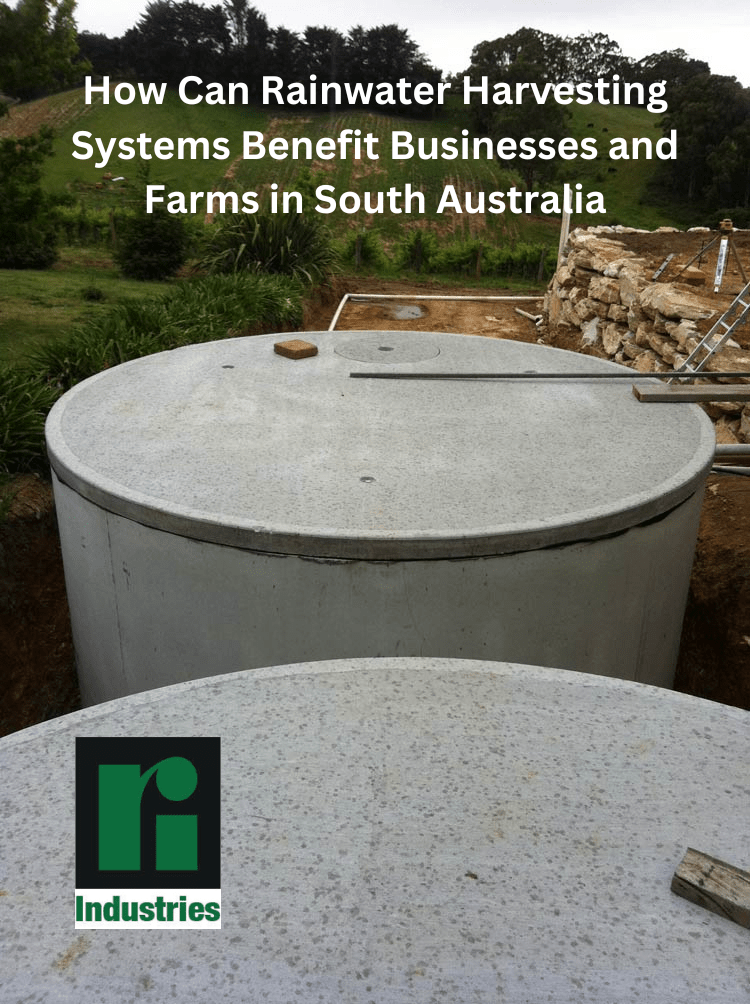
Image shows Ri-Industries concrete Rainwater tanks


Implementing rainwater harvesting systems can reap numerous benefits for businesses and agriculture in South Australia. This aligns with the region’s commitment to sustainable water practices. Let’s take a look at how businesses and agriculture can leverage rainwater harvesting for various purposes:

1. Irrigation:

  • Water for Crops: Rainwater collected in tanks can be used for crop irrigation, reducing the dependence on traditional water sources. This is particularly crucial for agricultural businesses facing water scarcity or limitations on water usage.
  • Landscaping and Green Spaces: Businesses with extensive outdoor landscaping or green spaces can use harvested rainwater for watering plants and maintaining aesthetically pleasing surroundings.

2. Process Water:

  • Industrial Processes: Certain businesses, especially those involved in manufacturing or industrial processes, can use harvested rainwater as a source of process water. This can contribute to cost savings and reduce the environmental impact associated with sourcing water from other water supplies.
  • Cooling Systems: Rainwater can be integrated into cooling systems, eg. for machinery or air conditioning, reducing the demand on mains water and potentially enhancing the efficiency of these systems.

3. Reduced Reliance on Other Water Supplies:

  • Cost Savings: By relying on harvested rainwater, businesses can experience cost savings on water bills, particularly in regions where water rates are high.
  • Drought Resilience: During periods of drought or water restrictions, businesses, farms and vineyards with rainwater harvesting systems can maintain operations more consistently, as they are not as affected by any water restrictions.

4. Compliance with Sustainable Practices:

  • Corporate Social Responsibility (CSR): Implementing rainwater harvesting aligns with sustainable and eco-friendly business practices, contributing to a positive corporate image and meeting the expectations of environmentally conscious consumers.
  • Regulatory Compliance: In areas where water conservation measures are enforced, businesses that adopt rainwater harvesting may find it easier to comply with regulations and restrictions on water usage.

5. Emergency Preparedness:

  • Water Security: Having a reliable on-site water source through rainwater harvesting provides a level of water security, especially during emergencies, water shortages, or disruptions in water supply.
  • Business Continuity: Agricultural operations and businesses that rely on water for critical processes or services can ensure continuity during water shortages by having an alternative water source.

6. Community and Stakeholder Engagement:

  • Demonstrating Environmental Leadership: Businesses that prioritise sustainability, including rainwater harvesting, can engage with the local community and stakeholders by showcasing their commitment to environmental responsibility.
  • Educational Initiatives: Farms and vineyards, in particular, can use rainwater harvesting as an educational tool, demonstrating responsible water management practices to visitors, customers, and the broader community.

Implementing a rainwater harvesting system requires careful planning, adherence to local regulations, and consideration of the specific needs and processes of the business or agricultural operation. Regular maintenance and monitoring ensure the optimal performance of the system, contributing to long-term benefits and sustainability.

Ri-Industries manufactures pre-cast concrete rainwater tanks in a range of sizes. Our tanks are made from high-frequency vibrated reinforced concrete using the highest quality of materials. Steel mesh is cast into the rainwater tanks and lids, and all fittings are made from brass – to give additional peace of mind.

Learn more about our rainwater tanks on our website or call 08 8444 8100 to speak with one of our expert team members. 


Xeriscaping in South Australia

by Ri Industries

Xeriscaping in South Australia is a landscaping approach that focuses on conserving water by using drought-tolerant plants and efficient irrigation techniques. It is particularly well-suited for regions with arid or semi-arid climates, such as South Australia, where water resources can be limited. Xeriscaping not only helps to reduce water usage but also creates beautiful and sustainable landscapes.

Here are some key principles and considerations for xeriscaping in South Australia:

Plant Selection:

  • Choose native and drought-resistant plants: Select plants that are adapted to the local climate and can thrive with minimal water. South Australia has a diverse range of native plants that are well-suited for xeriscaping, such as kangaroo paws, grevilleas, and saltbushes.
  • Group plants by water needs: Arrange your plants in zones based on their water requirements to ensure efficient irrigation. This helps avoid overwatering or underwatering specific areas.

Soil Preparation:

  • Improve soil quality: Enhance your soil’s ability to retain moisture by adding organic matter like compost. Well-amended soil can better support plant growth and reduce the need for frequent watering.

Mulching:

  • Apply mulch: Cover the soil with a layer of organic mulch, such as wood chips or straw. Mulch helps to conserve soil moisture, suppress weeds, and regulate soil temperature.

Efficient Irrigation:

  • Use drip irrigation: Drip irrigation systems deliver water directly to the root zones of plants, reducing water wastage through evaporation and runoff. Install a timer to control watering schedules.
  • Install rain sensors: Rain sensors can automatically shut off your irrigation system when it rains, preventing overwatering during wet periods.

Watering Practices:

  • Water deeply and infrequently: Instead of shallow, frequent watering, water your xeriscape plants deeply but less frequently to encourage deep root growth and drought resistance.
  • Water during cooler times: Watering in the early morning or late afternoon reduces water loss due to evaporation.

Hardscape and Design:

  • Use permeable materials: Choose permeable paving materials like gravel or permeable concrete to allow water to penetrate the soil rather than running off.
  • Group plants strategically: Group plants with similar water needs together to create visually appealing and water-efficient garden designs.

Maintenance:

  • Regularly inspect and maintain your xeriscape garden. Prune and remove dead or diseased plants, and adjust irrigation as needed based on seasonal weather changes.

Sustainability:

  • Consider using rainwater harvesting systems to collect and store rainwater for irrigation purposes, further reducing your reliance on mains water.

Xeriscaping in South Australia not only helps conserve water but also promotes the use of native plants, which can benefit local wildlife and create a sense of place in your landscape. Be sure to check with your local nursery or landscaping professionals for advice on selecting the best drought-resistant plants for your specific location in South Australia, as climate conditions can vary within the region.

See more about xeriscaping by visiting https://www.ri-industries.com.au/category/xeriscaping/.

Maintaining a Septic Tank in South Australia

by Ri Industries

Maintaining a septic tank in South Australia, as in any other region, is essential for the proper functioning of your wastewater system and to avoid costly repairs. Here are some household tips for homes with septic tanks in South Australia:

Regular Pumping:

Have your septic tank pumped out by a licensed professional regularly, typically every 3-5 years. The frequency may vary depending on the tank size and household usage.

Water Conservation:

Be mindful of water usage. Fix any leaks promptly, install water-saving fixtures, and avoid excessive water use, as it can overload the septic system.

Use Septic-Safe Products:

Use septic-safe cleaning products and detergents. Avoid harsh chemicals and antibacterial soaps, as they can disrupt the beneficial bacteria in the tank.

Proper Waste Disposal:

Do not flush non-biodegradable items like diapers, sanitary products, paper towels, or chemicals down the toilet. Use a waste bin for disposal.

Garbage Disposal:

Avoid using a garbage disposal unit, as it can introduce solid waste into the septic system, leading to clogs and reduced efficiency.

Limit Chemicals:

Reduce the use of strong chemicals, like bleach and drain cleaners, as they can harm the septic tank’s bacteria. Consider eco-friendly alternatives.

Spread Out Water Usage:

Avoid heavy water usage all at once. For example, do not do all your laundry in a single day. Spread out activities that involve water.

Regular Inspections:

Schedule regular inspections of your septic system by a qualified technician to catch any issues early and ensure it is functioning correctly.

Maintain Drain Fields:

Protect the drain field by avoiding parking vehicles or placing heavy objects on top of it. Plant grass or shallow-rooted vegetation over the area.

Keep Trees and Shrubs Away:

Avoid planting deep-rooted trees or shrubs near the septic system, as their roots can damage pipes and the tank.

Monitor for Warning Signs:

Be vigilant for signs of septic system problems, such as slow drains, foul odours, or wet spots. Address issues promptly.

Record Keeping:

Keep records of maintenance, pumping schedules, and repairs. This will help you track the health of your septic system over time.

Compliance with Regulations:

Familiarise yourself with local regulations and requirements for septic systems in South Australia and ensure your system complies with them.

Remember that septic system maintenance is crucial for both your home’s functionality and the environment. Regular care and responsible usage can help prolong the life of your septic tank and reduce the risk of costly repairs. When in doubt, consult a professional for guidance on your specific system’s needs.

Want more tips? Check out the many articles we have on our website.

The Importance of Trade Waste Arrestors in South Australia

by Ri Industries

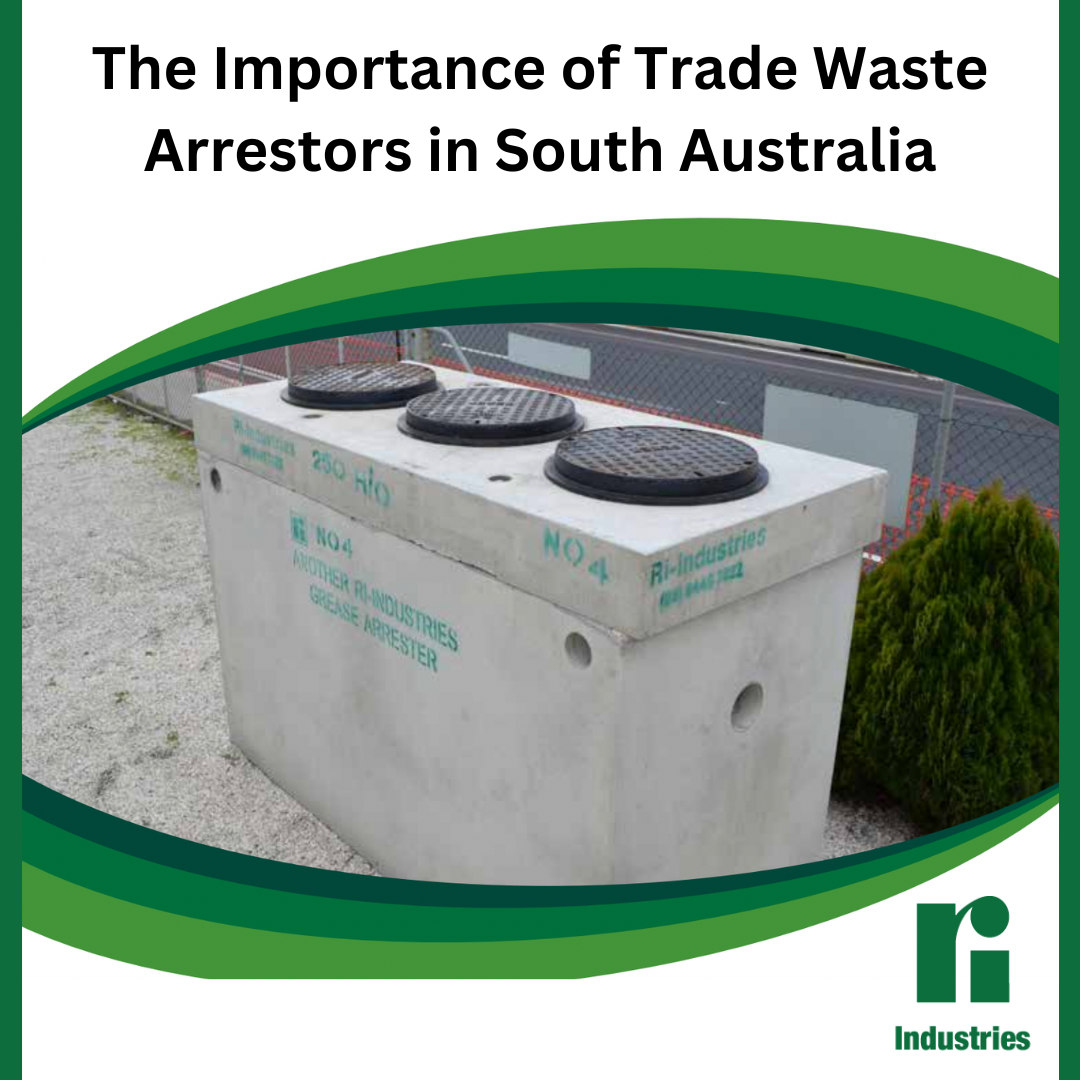
image of trade waste arrestors

Trade waste arrestors are essential for businesses in South Australia that generate trade waste. What is trade waste? It’s liquid wastewater from a commercial or industrial entity that enters the sewer system. Some trade waste must be pre-treated before entering the sewer system. In those cases, trade waste arrestors are used to stop harmful trade waste entering the drainage system where it may affect people or the environment. The arrestors capture the waste and allow it to settle and separate. The treated wastewater can then safely enter the sewer system while the harmful waste can be disposed of.

A number of different trade waste arrestors are available including silt, grease and detention tanks. The type of trade waste arrestor that is required for a business will depend on the type and volume of trade waste that it generates. If your business requires one, our experts can help determine which type is correct for your business.

Let’s look at some of the benefits of using trade waste arrestors in South Australia:

  • Protects sewerage systems from damage: Trade waste arrestors trap pollutants that can damage sewerage systems, such as oil, grease, and suspended solids. This helps to prevent blockages and overflows, which can cause flooding and environmental damage.
  • Protects the environment: Trade waste arrestors trap pollutants that can pollute waterways and the environment, such as oil, grease, and chemicals. This helps to keep our waterways clean and safe for people and wildlife.
  • Prevents fines: Businesses that discharge trade waste without a trade waste arrestor can be fined by SA Water. By installing a trade waste arrestor, you can help to protect yourself from fines and financial penalties.
  • Improves public health: Trade waste arrestors help to reduce the risk of disease by preventing the spread of pollutants, such as bacteria and viruses. This helps to protect public health and safety.

Learn about the benefits of a Ri-Industries trade waste arrestor along with some information about the installation and maintenance by reading Trade Waste Arrestors by Ri-Industries – Benefits, Installation, and Maintenance

If you are a business in South Australia that generates trade waste, you should have a trade waste arrestor installed. This is an important investment that will help to protect your sewerage system, the environment, and public health. Learn about the Ri-Industries Trade Waste Arrestor on our website and call to 8444 8100 to speak with one of our experts.

Environmental Benefits of Concrete Septic Tanks

by Ri Industries

The environmental benefits of concrete septic tanks are an important factor when deciding on
the type of septic tank to install for your home or business. We understand the importance of
caring for our environment, after all, we live here too. So, let’s take a moment to look at the
environmental benefits of the concrete septic tanks designed and built by Ri-Industries.
Concrete septic tanks offer several environmental benefits in South Australia. Here are some
key advantages:

1. Durability and Longevity: Concrete septic tanks have a long lifespan, typically lasting for
several decades. This durability reduces the need for frequent replacements, minimising
waste and the environmental impact associated with manufacturing and installing new
tanks.

2. Resistance to Groundwater Contamination: Concrete septic tanks are designed to be
watertight, preventing the leakage of effluent into the surrounding groundwater. This
feature helps protect the quality of groundwater, which is essential for drinking water
supplies and the health of ecosystems.

3. Efficient Treatment of Wastewater: Concrete septic tanks provide an effective means of
treating wastewater from households. They separate solid waste from liquids and allow
the natural decomposition of organic matter. The treated effluent, which is typically
higher in quality, can then be released into the soil through a drainage field or leach
drain system, where further treatment occurs.

4. Nutrient Recycling: The effluent produced in concrete septic tanks contains valuable
nutrients, such as nitrogen and phosphorus. When properly treated and managed, this
nutrient-rich effluent can be beneficial for fertilising plants and enhancing soil fertility,
reducing the need for synthetic fertilisers.

5. Reduced Energy Consumption: Concrete septic tanks operate passively, without the
need for electricity or mechanical components. They rely on natural processes, such as
gravity and bacterial activity, to function effectively. This feature reduces energy
consumption and the associated greenhouse gas emissions.

6. Minimised Chemical Usage: Compared to other wastewater treatment systems, concrete
septic tanks typically require fewer chemicals for operation and maintenance. This
aspect reduces the potential for chemical contamination in the environment and lowers
the reliance on potentially harmful substances.

It’s important to note that proper design, installation, and regular maintenance are crucial for
maximising the environmental benefits of concrete septic tanks. Regular inspections, pump-
outs, and adherence to local regulations and guidelines are necessary to ensure their optimal
performance and minimise any potential negative impacts on the environment.

We welcome the opportunity to speak with you about our products. You can learn more by
going to our website or by calling 08 8444 8100.

Sustainable Home Designs Benefit from Including Concrete Rainwater Tanks

by Ri Industries

Underground concrete rainwater tanks can play a vital role in sustainable home design and
construction practices. Here are some ways in which they can be seamlessly incorporated:

1. Integrated Water Management: Designing a sustainable home involves efficient water
management. Concrete rainwater tanks can be integrated into the overall water
management system, collecting and storing rainwater for various uses such as toilet
flushing, laundry, garden irrigation, and even potable water with proper filtration. By
incorporating rainwater tanks, homeowners can reduce their reliance on mains water
supply, conserve water resources, and minimise the environmental impact of water
consumption.

2. Green Roofs and Walls: Concrete rainwater tanks can be integrated into green roof or
green wall systems. These systems involve vegetation planted on roofs or walls, which
can help insulate the building, reduce stormwater runoff, and improve air quality. The
rainwater collected in the tanks can be used for irrigation, ensuring the plants receive an
adequate water supply.

3. Sustainable Landscaping: Concrete rainwater tanks can support sustainable
landscaping practices. The collected rainwater can be used for watering plants, lawns,
and gardens, reducing the reliance on potable water and conserving water resources.
Additionally, the tanks can be designed to incorporate overflow systems that direct
excess water to permeable surfaces or bioswales, minimizing runoff and replenishing
groundwater.

4. Durability and Longevity: Concrete rainwater tanks are known for their durability and
longevity. By incorporating these underground tanks into the initial construction of a
sustainable home, homeowners can ensure long-term water storage and reduce the
need for replacements or repairs. This reduces waste and supports a more sustainable
approach to building materials.

5. Education and Awareness: Incorporating concrete rainwater tanks into sustainable home
design provides an opportunity to educate homeowners and raise awareness about the
importance of water conservation and sustainable practices. Homeowners can learn

about the benefits of rainwater harvesting, the water cycle, and how their actions can
contribute to environmental sustainability.

By considering the aspects above, homeowners can enhance the sustainability of their homes
while reducing their environmental footprint.

As a manufacturer of pre-cast concrete products, Ri-Industries can provide you with below
ground concrete rainwater tanks. Designed and manufactured in Adelaide to the highest
standards, our underground rainwater tanks are superior quality, with a range of sizes available.
Our team has the perfect rainwater tank for you. Call 08 8444 8100 to learn more. We look
forward to hearing from you!

How Concrete Septic Tanks Play a Role in Sustainable Living and Reducing Waste

by Ri Industries

Concrete septic tanks can play a significant role in sustainable living and
reducing waste. We’ve previously written a number of articles about water
conservation. You can find those articles on our website.

Today we’d like to talk about a few ways in which concrete septic tanks can
contribute to a more sustainable and environmentally-friendly way of living:

1. Waste management: Concrete septic tanks are designed to treat and
store wastewater from households, allowing for safe and effective
disposal of waste. This helps to reduce the amount of waste that
ends up in landfills and minimizes the risk of pollution and
contamination to the environment.

2. Water conservation: A properly functioning concrete septic tank can
help to conserve water by treating and reusing wastewater. This can
be particularly useful in areas where water is scarce, as it allows for a
sustainable supply of water for household and agricultural use.

3. Energy efficiency: Concrete septic tanks can be designed and
installed in a way that maximizes energy efficiency. For example,
some designs use gravity to move wastewater through the system,
which reduces the need for energy-intensive pumps.

4. Durability: Concrete septic tanks are known for their durability and
long lifespan. This means that they can last for many years with
proper maintenance, reducing the need for frequent replacements
and waste.

As you can see, concrete septic tanks can play a key role in reducing waste
and promoting sustainability in households and communities. By
effectively treating and managing wastewater, conserving water,
maximizing energy efficiency, and being durable, concrete septic tanks can
help to create a more sustainable future.

Would you like to learn more about the Ri-Industries septic tank? You may
click this link or call us at 08 8444 8100.

Rainwater Collection Tanks, What are the Benefits?

by Ri Industries

Rainwater collection tanks are a popular option for households and businesses in South
Australia, especially in areas where water is scarce or expensive. The state government
encourages the use of rainwater tanks through various initiatives, such as rebates and
education programs.

The benefits of using rainwater tanks in South Australia include:

1. Water conservation: South Australia is a water-scarce region, and rainwater tanks help
to conserve water by collecting and storing rainwater for later use.
2. Cost savings: Rainwater tanks can help reduce water bills, particularly in areas where
water is expensive.
3. Improved water quality: Rainwater is often of higher quality than mains water, as it is free
from the chemicals used to treat mains water.
4. Reduced strain on infrastructure: Rainwater tanks can help reduce demand on mains
water infrastructure, particularly during times of drought.

When using rainwater collection tanks in South Australia, it is important to ensure that the tanks
are properly installed and maintained. This includes regular cleaning of the tank and ensuring
that it is correctly plumbed into the household or business water supply.
It is also important to check with local councils and water authorities for any regulations or
requirements related to the installation and use of rainwater tanks, as these can vary depending
on the area.

Ri-Industries offers concrete rainwater tanks that are built to last. Designed and manufactured in
Adelaide to the highest standards, our underground rainwater tanks are superior quality, with a
range sizes available.

Concrete rainwater tanks offer a number of advantages:

● The water stays cooler.
● No algae develops.
● The water has no after-taste.
● They are vandal-proof and fire-proof.
● Being underground means they are out of sight and don’t take up much of your valuable
real estate.
● Concrete is stronger and more durable.

Coupled with our manufacturer’s warranty, you can be sure that rainwater tanks from Ri-
Industries will last the distance.

Call us on 08 8444 8100 to learn more or request a quote. Our team are more than happy to
answer any questions you may have.


Septic Tank Inspections_ Why They’re Necessary and How Often You Should Get One

by Ri Industries

Image of septic tank truck and text saying Septic Tank Inspections: Why They're Necessary and How Often You Should Get One

Septic tank inspections are an essential part of maintaining your septic system. They help to identify any potential issues early on, before they become major problems that require costly repairs or replacements.

There are a few reasons why septic tank inspections are necessary:

  • To ensure proper functioning: Septic tanks need to be working correctly to prevent sewage backups or overflows, which can be hazardous to your health and the environment.
  • To detect problems early: During an inspection, a professional can identify any issues with your septic system, such as leaks or blockages, and take corrective action before they cause damage.
  • To comply with local regulations: In many areas, regular septic tank inspections are required by law to ensure public health and safety.

So, how often should you get your septic tank inspected? The frequency of inspections will depend on several factors, including the size of your tank, the number of people in your household, and your water usage habits.

As a general rule, it’s recommended that you have your septic tank inspected every three to five years. However, if you have a large household or heavy water usage, you may need to have it inspected more frequently.

It’s also important to note that some signs may indicate the need for an inspection sooner. For example, if you notice slow drains, foul odours, or pooling water near your tank, you should have your septic system inspected as soon as possible.

Our website has a number of blogs containing helpful information about septic tanks. If you still have questions, we’ll be happy to answer.  Please call 08 8444 8100.