Compost to Conserve Water

by Ri Industries

Water conservation can be achieved using many methods.  We’ve talked about a lot of them, but one method we haven’t touched on yet is composting. Yes, composting can actually help us conserve water!

Let’s start at the beginning by answering the question, what is compost? Quite simply, compost is decomposed organic matter. It is generally made up of vegetable peelings, fruit waste, grass clippings, tea bags, and plant prunings, but other materials may be added as well. Compost is well known for adding nutrients to gardens and plants, but it also helps to conserve water.

Using composted mulch in landscaping and agriculture has been shown to improve the efficiency of water use by reducing evaporation, improving water infiltration and storage, and reducing deep drainage.

Turf grown with the application of composted soil conditioner can require up to 30% less water. This can increase root penetration, resulting in deeper root systems that explore a larger soil area for moisture and nutrients, reducing deep drainage and irrigation requirements. In sandy soils, composted soil conditioners improve water retention and lateral root distribution in the soil, improving plant access to soil water, and reducing deep drainage and irrigation requirements.

Compost application tips:

  • Composted mulch is applied on the soil surface around the plants after planting. It should not touch the stems and trunks of plants.
  • Compost can be applied any time of the year.
  • For water conservation, apply prior to summer when soil evaporation is usually highest and when plants require the most water.
  • Compost exposed to full sun will not deliver its full benefits so use compost on the soil and then cover it with mulch.

Here at Ri Industries we’re always on the lookout for water conservation tips we can share. This one can be a fun project and result in beautiful foliage and tasty fruit and vegetables. How great is that?

For more ways Ri Industries can help, contact us at 08 8444 8100.


Is Water Collected from a Rainwater Tank Safe?

by Ri Industries

Warmer weather typically means increased water use around the home. Plants, grass, and gardens need extra watering. Pools need to be filled or topped off, and people tend to need an extra shower here and there. Perhaps this is why we’ve been fielding a lot questions about our Ri Industries Concrete Rainwater Tanks.

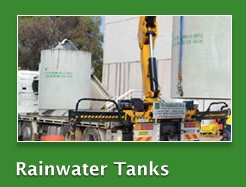
rainwater_tanks

One of the most frequent questions we get asked is about the safety of drinking the collected rainwater. According to SA Health (sahealth.sa.gov.au):

“Generally rainwater is safe to drink. If the rainwater is clear, has little taste or smell and is from a well-maintained system, it is probably safe and unlikely to cause any illness for most users.

Disinfecting the water before consumption should be considered for those who are immuno-compromised such as the very young or very old, cancer patients, people with diabetes, organ transplant recipients or people who are HIV positive. This can be achieved by bringing the rainwater to the boil.”

Another often asked question is about the quality of collected rainwater. Again, according to SA Health:

“Rainwater collected in tanks generally contains few chemicals. However, there may be increased pollution by airborne contaminants from very heavy traffic or in industrial areas.

Collection of rainwater for human consumption (drinking and cooking) in areas affected by very heavy traffic, industry, incinerators and smelters is not recommended.

The microbiological quality of rainwater collected in domestic tanks may not be as good as mains water, but if collection systems are well maintained, the risk of harmful organisms being present is low. The supply of good quality water depends on ensuring correct design and installation followed by sensible maintenance of the rainwater tank and catchment area. The collection of rainwater involves low maintenance — not no maintenance.”

When you purchase and install a concrete rainwater tank from Ri Industries, you can be certain of correct and quality design and installation. Our rainwater tanks are very low maintenance as you will see on the maintenance page of our website.

For more information, please call us at 08 8444 8100.


Helpful Tips to Conserve Water in the Garden

by Ri Industries

Have you been feeling an itch in your green thumb? Warmer weather tends to have that effect whether you’re an avid gardener or not.  Plants and flowers not only look pretty, but have been scientifically proven to help us feel happier. Now that’s a great reason to head outdoors and get your hands dirty! All we ask, is when you tend to your garden keep water conservation in mind.

It is possible to grow a gorgeous garden while being water conscious. Here are just a few tips on how:

  • Water the roots of plants rather than the leaves, reducing wind spray and evaporation.
  • Don’t water in the middle of the day, in windy conditions or if it is likely to rain.
  • Make a small dam from mulch and soil to avoid water running off the soil.
  • Cool season grasses should be left longer in summer but warm season grasses such as couch and buffalo can be kept short.
  • Avoid cutting grass by more than a third of its length at any one time.
  • Replace struggling plants in autumn with drought tolerant species.
  • Place plants in the right spot so they can get the proper amount of sunlight and will not require extra watering.
  • Outdoor plants in pots use a lot more water than plants in the ground so use sparingly.
  • Wetting agents can reduce pot watering by 50 percent and water storage products in the soil will also extend periods between watering.
  • Good quality garden tap fittings save water because they are less likely to break or drip.
  • Drip irrigation systems are more water efficient than overhead watering because they deliver water directly to the root system, don’t cause overspray and prevent excess surface evaporation.
  • A digital watering timer can also significantly reduce the amount of water used.

Of course, our best tip is to use water from a rainwater tank!  Concrete rainwater tanks from Ri Industries offer many benefits, such as:

  • The water stays cooler.
  • No algae develops.
  • The water has no after-taste.
  • They are bullet proof, vandal-proof and fire-proof.
  • Being underground means they are out of sight and don’t take up much of your valuable real estate.
  • Above ground tanks can be spray painted to fit in better with your surroundings.
  • Concrete is stronger and more durable.

For more information, please call us at 08 8444 8100.


Benefits of a Ri Industries Trade Waste Arrestor

by Ri Industries

If you’re a frequent reader of our blog, and you certainly should be, you know that we talk a lot about water conservation and our residential products. Here at Ri Industries we believe in helping our local businesses with their waste needs, known as Trade Waste, as well.

Consider the amount of waste produced in an industrial setting. The sheer magnitude can be enough to frighten any septic system, but the contents of the waste may be the real scare factor. What materials are being returned to our soil?

Have you ever spent any time in a hair salon? Have you smelled the chemicals used on hair and nails? Yup, those get washed down the drain and if not properly treated, returned to the soil.

It’s not just hair salons we need to be concerned about. Petrol stations, service stations, dry cleaners, commercial vehicle washing, and so many more will pollute our area if their waste is not properly treated.

RI4

That’s where Ri Industries comes in! Our trade waste arrestors offers a number of benefits:

  • Made from precast concrete with a strength of 50 MPa at 28 days.
  • A number of different trade waste arrestors are available including silt, grease and detention tanks.
  • All inlets suit HDPE pipes for easier connection.
  • Gas-tight lids set in precast concrete can also be supplied, as well as extension risers.
  • Increments and trafficable, gas-tight, heavy duty cast iron/concrete covers are available.
  • Units are lowered into the excavation site providing the site is level, firm and accessible.
  • All units are SA Water approved.

Now, wouldn’t you feel better if you knew the local businesses near you had a Ri Industries Trade Waste Arrestor installed? More information can be found on our website, but speaking directly with us is always best. Give us a call at 08 8444 8100.

The Ri-Cycle Offers Many Benefits to Commercial Buildings

by Ri Industries

Commercial buildings have a challenge that the residential home owner need not worry about. A substantial amount of waste water is produced. Therefore, we rely upon building owners to make good choices for our environment and recycle as much water as possible. For buildings in non-sewered areas, the Ri-Cycle Commercial Waste Water Treatment System is an ideal solution.

The Ri-Cycle is an aerobic system and one of the most effective methods in Australia for dealing with sewage. It offers building owners and occupants the chance to reclaim their wastewater by recycling and reusing water from their building or sites.

A sample of the types of organisations that can benefit from the Ri-Cycle are:

  • Hotels and motels
  • Function centres
  • Caravan parks
  • Factories and other industrial buildings
  • Mining camps
  • Schools
  • Wineries

Why should your business choose the Ri-Cycle? First and foremost, it’s manufactured by Ri-Industries and we are leaders in pre-cast concrete products that enhance the environment. The Ri-Cycle has a unique design that offers many benefits, including:

  • Flexible design so they can be tailored to suit your exact requirements
  • The high quality bio filter medium enhances the purity of the recycled water
  • All irrigation pumps are stainless steel, submersible, quiet, reliable and inexpensive to operate.  And because of the high quality of effluent being passed through the system the normal manufacturer’s warranty of 12 months is extended to 3 years
  • A German-manufactured side channel Air Pump offers a reliable and efficient aeration
  • Three sizes of Ri-Cycle tanks offer maximum flexibility for use in many buildings and sites
  • Child-proof, vandal-proof and trafficable lids give you additional peace of mind
  • A manufacturers’ warranty on tank construction – longer than comparable products.

Questions? Want to learn more? Give us a call at 08 8444 8100 and we’ll be happy to help you.

Rainwater Tanks Conserve Water at Home

by Ri Industries

Australians are urged to conserve water every day.  However, the problem is not ours alone.  A 2015 report by NASA states that 21 of the world’s 37 largest aquifers (underground reservoirs) have passed their sustainability tipping points, meaning more water was removed than replaced during the decade-long study period.

Aquifers can take thousands of years to fill up and only slowly recharge with water from snowmelt and rains. The NASA study found the Canning Basin in Australia’s western end had the third-highest rate of depletion in the world.

In 2007, the people of Adelaide were told that “critical human needs” might not be met in the future. Despite what many people believe, there is not an unending supply of water. It is imperative that we work together to conserve our water supply.

Aquifers supply roughly 35% of water used by humans worldwide. We need to find balance by removing less water than is added. Ri Industries blogs, such as this one, contain lots of simple tips for conserving water around the home.

Ri Industries concrete rainwater tanks are a great way to conserve water at home. The tanks can be installed above ground or below ground and they offer a number of advantages, such as:

  • The water stays cooler.
  • No algae develops.
  • The water has no after-taste.
  • They are bullet proof, vandal-proof and fire-proof.
  • Being underground means they are out of sight and don’t take up much of your valuable real estate.
  • Above ground tanks can be spray painted to fit in better with your surroundings.
  • Concrete is stronger and more durable.
  • Our reinforced concrete rainwater tanks are built to last and basically are maintenance free.

Learn more about our concrete rainwater tanks by calling us at 08 8444 8100.

Save Money with Rainwater Harvesting

by Ri Industries

People often say that they would eat healthier or buy organic groceries if they didn’t cost more. They would replace older appliances with energy efficient models, if they could afford it. Wouldn’t it be great if doing something healthy and good for the environment could save you money? Ri Industries has a suggestion for you. Rainwater harvesting. 

Rainwater harvesting is simply the process of collecting rainwater and storing it for human use. Guess what? Rainwater is FREE! Once you have a rainwater tank installed you begin saving money on your water bill each and every month. Plus, using harvested rainwater means using less water from the mains thereby you will be helping the water conservation efforts. 

Did you know that stormwater can actually damage creeks and water habitats? It’s true. Rainwater harvesting can actually help protect against significant damage. 

Rainwater can be used to flush toilets, do laundry, water the garden, wash cars, and more. Using rainwater in and around your home can largely reduce the amount of water that you use. 

Ri Industries offers concrete rainwater tanks that can be installed above or below the ground. Their design makes them basically maintenance free. Call us to learn more, 08 8444 8100.

Teach Kids About Waste Water with this Recipe for Poo

by Ri Industries

The environment is one of the greatest gifts we pass on to the next generation. It is important that we teach them to treat it well, respect it, and nurture it so it can be passed on to further generations. Ri Industries is always on the lookout for ways to help teach children about caring for the environment; especially conserving water.

We came across a video made by SA Water which included a recipe for poo. You may be wondering why anyone would possibly need a recipe since we’ve all been making poo since we were born. We wondered too and found out that SA Water uses the poo recipe to get kids interested in talking about waste water. We’d like to share the recipe with you, along with some talking points, so you can begin a dialogue with the kids in your life.

Poo Recipe

Ingredients:

  • Baked Beans
  • Corn
  • Banana
  • Chocolate Muffins

Place all ingredients in a bowl. This is the meal going into the stomach. Add some saliva (water) and use a potato masher to mash up the mixture. Place in a plastic bag. Cut a small hole in the bottom of the bag and squeeze.

Now that the kids are chuckling and paying attention, lay some education on them. Here are some important facts they should know:

  • Feces and urine make up just a very small part of wastewater and is a small part of what goes down into the sewers.
  • .1% of materials that wind up in wastewater treatment plants are solid. The rest is water! We use a lot of water to wash waste away.
  • It is imperative that we recover that water.
  • The water must be cleaned up before it is returned to the environment.

A bit of fun. A bit of learning. A great way to get the conversation started and create awareness. While you’re at, why not give us a call and learn about our residential and commercial products to see how you can help preserve our environment.

Rainwater Tanks Make a Difference to the Australian Climate

by Ri Industries

“In Australia water is a valuable commodity. Rainwater can provide a renewable supply of natural, soft, clear, and odourless water that can be used for a range of purposes including drinking, washing, bathing, laundry, and gardening. In some areas, it may represent the primary source of household water while in others it can supplement existing mains water supply.” – Government of South Australia

rainwater_tanks

The government of South Australia recommends the use of rainwater tanks to help conserve water. Ri Industries manufactures above ground or below ground concrete rainwater tanks for both residential and commercial use.

What are the benefits to the Ri Industries concrete rainwater tanks?

  • The water stays cooler.
  • No algae develops.
  • The water has no after-taste.
  • They are bullet proof, vandal-proof and fire-proof.
  • Being underground means they are out of sight and don’t take up much of your valuable real estate.
  • Above ground tanks can be spray painted to fit in better with your surroundings.
  • Concrete is stronger and more durable.

Give us a call at 08 8444 8100 to learn about our rainwater tanks and other products as well.


Conserve Water by Using Waterless Urinals

by Ri Industries

Australians are bombarded with information about our dry climate and concerns of drought. Ri Industries contributes by encouraging water conservation and providing tips to conserve as much water as you can. One method of water conservation that we have not touched upon is the waterless urinal. Now don’t be frightened of what a waterless urinal might look like, or worse even, smell like, after a number of uses. Let us explain the process before you make up your mind.

Let’s start with why one must flush a urinal. After all, isn’t the item deposited into the urinal a liquid that will just go down the drain? Of course the answer to that is yes, but that liquid most likely has a certain odour attached to it and without flushing the shiny porcelain with water, that odour may linger. In a regular urinal, water pools in a U-shaped trap under the drain, forming a seal against sewer gases below. In contrast, a cartridge of liquid sealant sits on top of the drain in a waterless urinal. The liquid is lighter than the urine, which sinks through the cartridge and drains out. The sealant keeps any sewer gases from backing up. Such a simple solution that can make a great impact in our efforts to conserve water.

It seems the biggest hurdle in using waterless urinals is us: humans. We’re not always easy to retrain. Old habits die hard and we don’t like change. Reports show that most of the problems seen with waterless urinals are due to human error during maintenance. One of the largest manufacturers of waterless urinals is now developing a product which eliminates the need for humans to get involved, except for changing the cartridge every so often, so improvements should be seen.

What do you think? Do waterless urinals sound like a good conservation tool? We do!

How Do People Spend Their Time on the Toilet?

by Ri Industries

People are, by nature, very social beings. We look to spend time with friends and family and feel lonely when we are by ourselves for too long – except when it comes to time spent in the loo. Then, most of us, look to be alone. After all, these are very personal matters we are attending to. But, have you ever wondered exactly what goes on behind those closed toilet doors?

If you have, you are not alone. Plenty of studies have been conducted to determine how we spend our time in the loo. Always looking to keep our customers informed, Ri Industries has compiled a list of some the most interesting findings for your amusement and education.

  • An average person will spend approximately 1 and a half years of their life in the toilet.
  • Men spend more time on the loo than women do.
  • A 2013 study found that 6% of Australians access social networks in the toilet and 7% access social networks in the bathroom.
  • A study conducted by MSN News in 2013 found 59% of men and women admitted to sending texts and 45% to sending emails, nearly a third said they had taken a call and 24% revealed that they have phoned someone whilst on the toilet.
  • 29% of people in the study said it was because they ‘wanted to prevent boredom setting in’ and 12% said that they felt pressure to stay on top of emails and messages, even while in the toilet.
  • 15% of people admitted to having dropped their mobile down the toilet.
  • An American Standard study found 63% of people read books, magazines, and newspapers when in the toilet.
  • 95 percent of people do not wash their hands properly before leaving the bathroom, according to a 2013 study conducted by Michigan State University researchers.
  • 15% of men don’t wash their hands, ever, compared with 7% of women. And of the people who do? Just 50% of men use soap, compared to 78% of women.

So now you know what happens behind those closed doors. We bet you’ll remember those hand washing facts the next time someone reaches to shake your hand!


Everything You Never Wanted to Know About Toilet Paper

by Ri Industries

Hopefully, you have read our previous blogs and know that they are full of useful and important information about septic systems, green living, and water conservation. There is one topic which has been overlooked despite the impact it has on each of these topics: toilet paper.
How do you choose the toilet paper you buy? Do you grab the least expensive? Do you look for “green” labeling? Do you choose 1 ply, 2 ply, or 3 ply? Do you research which brand will have the least effect on our environment? Perhaps you are uncertain what you should consider before making this important purchase, so we have compiled a number of facts to educate and entertain you.
• Did you know that approximately 70 – 75% of the world does NOT use toilet paper? Some areas of the world have a lack of trees which means not enough resources to produce the paper. Some people cannot afford toilet paper whilst others just don’t want to spend money on fancy paper that is made just to wipe their bums.
• A roll of toilet paper lasts approximately 5 days in an average household.
• On average, people use 8 – 9 sheets of toilet paper per use with an average of 57 sheets per day.
• On average, 384 trees are used to make the toilet paper one man will use in a lifetime.
• The first paper specifically designed for the task of cleaning ones’ bottom dates back to the 14th century when a Chinese emperor ordered it in 2 foot X 3 foot sheets.
• Rolled and perforated toilet paper, as we use today, dates back to the 1880’s.
• People who hang the paper to be pulled from behind are considered to be more intelligent than those who hang it to be pulled from the top.
• In 1935, Northern Tissue proudly advertised splinter free toilet paper. That’s right, be grateful for the softness we experience today!
• In 1999, The Virtual Toilet Paper Museum opened.
• Only five percent of the toilet paper we flush away in Australia is made from recycled paper.
1millionwomen.com provides some good information on the effects of worldwide toilet paper production and its impact on the environment. For example, how many brands claim to be “green”, but are not as green as we are led to believe. They explain just what we should look for in green toilet paper.
If going green is not your top concern, perhaps you would like to go gold. Yes, Toilet Paper Man has a limited supply (1) of 3 ply toilet paper with 24 carat gold throughout the roll. Best of all, this product is proudly made right here in Australia!