How to Water Your Garden With Water Collected in a Rainwater Tank

by Ri Industries

Before we discuss how to water your garden with water collected in a rainwater tank, let’s discuss why you might want to use rainwater.

First, rainwater harvesting reduces pollution. When rain falls, oil, pesticides, animal waste and fertilisers from lawns, footpaths, driveways, and streets get washed into our sewers which then overflow into rivers and estuaries. By harvesting rainwater, we eliminate those possible contaminants joining the water. Harvested rainwater is also free of salts, pollutants, and chlorine that are found in ground and surface water.

Second, harvested rainwater reduces demand on our water supplies. This is especially important during the summer months and times of drought.

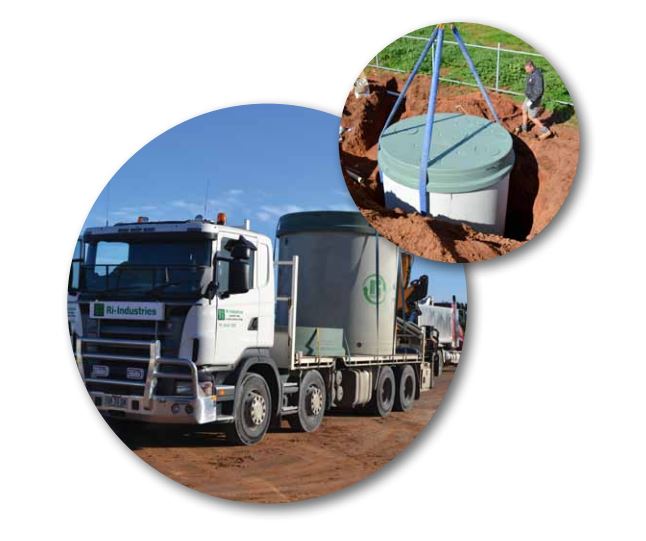
Now that you have decided to harvest rainwater, how do you actually capture the water? We recommend installing a Ri-Industries Concrete Rainwater Tank. Our underground concrete rainwater tanks offer a number of advantages:

  • The water stays cooler.
  • No algae develops.
  • The water has no after-taste.
  • They are vandal-proof and fire-proof.
  • Being underground means they are out of sight and don’t take up much of your valuable real estate.
  • Concrete is stronger and more durable than plastic, steel or fibre glass.
  • Once the rainwater tank has been installed, you will need to move water from the tank to your garden. The best way to do this is with a pump.
  • Pump systems can be submerged underground or they can be free standing. They can provide enough pressure that the water flows similarly to mains water. You can also install a mains switch-over device to switch from rainwater to mains use when the rainwater runs out.

Another option to consider is having a header tank. This is a great option to use with underground tanks. The header tank will be placed at a higher level than the storage tank. A low-powered pump will transfer the water from the rainwater tank to the header tank, then you can use a gravity fed method to release the water. You can fit a garden tap near to the bottom of the header tank and use a soaker hose to transfer the water out of the tank, using gravity.

Watering your garden with harvested water is a great way to help conserve water and eliminate pollutants. Ri-Industries is proud to provide quality concrete rainwater tanks in Adelaide and surrounding areas for your use. Please call us to speak with one of our experts to learn more.

Unclog Drains Without Harsh Chemicals

by Ri Industries

No matter how careful you are when using the sinks in your home, inevitably you will come up against a clogged drain. Perhaps the water is simply slow to drain down the pipe or the pipe is completely clogged and no water is draining. Either way, a fix is needed. Calling a plumber is an option of course, but if you choose to battle the clog yourself you have a choice to make.<

Do you want harsh chemicals making their way into your sewer system and eventually into the waterways? Do you want to breathe in the harsh chemicals while they do their work? Bleach and sodium hydroxide are the main ingredients in drain cleaners and are severely corrosive.  Contact via inhalation, ingestion, skin, and the eyes can cause major irritation, vision problems, vomiting, shock if ingested, and even thermal and/or chemical burns. If you need to clear your drains regularly, you are at risk of many potential health problems.

To avoid any potential problems, you will need to find alternative processes that will work to clear the drain without using harsh chemicals. Ri-Industries respects that decision and offers these following options for you to try, based on our knowledge of septic systems. 

  1. A simple and cost-effective alternative to harsh chemicals is to use washing liquid and hot water. When the clog is caused by grease buildup, this is an especially good option. Simply squirt a good amount of washing liquid down the drain and follow that with a kettle full of boiling water. This will break down the grease and clear the clog.
  2. When baking soda and vinegar combine, a chemical reaction happens which will bubble up and dissipate the clog. Begin by bailing out any standing water and removing all debris. Pour 1/2 a box of dry baking soda into the drain and then pour 1/2 cup a vinegar into the drain. IMMEDIATELY create a tight seal with a plunger or stopper.  The chemical reaction will be similar to those volcano experiments at primary school so be sure the hole is completely sealed to keep everything in the drain. Wait approximately 30 minutes and then pour a kettle full of boiling water down the drain. The drain should now be clear. 
  3. Baking soda mixed with hydrogen peroxide will also work. Mix one cup of hydrogen peroxide with 1 tablespoon of baking soda. Pour down the drain and allow to foam. This should remove the clog. 

You can clear a clog and still be gentle on your health and the environment by using the above options. If you have questions about your septic system, our experts will be happy to assist you. Please call us at 08 8444 8100.
The Benefits of Xeriscaping

by Ri Industries

Xeriscaping, pronounced “zeer-i-scape,” is defined as ‘landscaping designed specifically for areas that are susceptible to drought, or for properties where water conservation is practiced.’ The term is derived from the Greek word ‘Xeros,’ which means dry, and ‘scape,’ which means scene. Put together, we get ‘dry scene.’

Xeriscaping is a beneficial practice in South Australia as we battle drought or limited rainfall conditions. The Australian Government Bureau of Meteorology puts out a monthly drought report and the latest (June 2019) shows western South Australia once again had below average rainfall. For those of us who want beautiful gardens and/or to help our environment, xeriscaping can be a fantastic solution. 

 What are the benefits of xeriscaping?

  • Reduce water consumption as much as 50 -75%. In fact, if you choose a desert landscape it can eliminate water consumption completely.
  • Limited maintenance is required as mulching and weeding may be all that is required.
  • All natural – by choosing native plants there will be no need for chemical supplements.
  • Reduces pollution because there is no need to use gardening tools such as gas mowers.
  • Creates a wildlife habitat by growing native plants alongside trees, and shrubs.
  • Saves money since there is no need to purchase fertiliser or expensive gardening equipment.

Since the most important aspect of xeriscaping is reduced water consumption, it is important to research the plot of land where the garden will be. Look at the contours of the terrain, soil absorption, and drainage patterns. You want soil that is rich in organic material and you will want to keep it well aerated. Compost is a great way to enrich the soil. 

The goal of the xeriscape is to provide as much of the needed water by rainfall as possible. However, there will be times when additional water will be needed. Consider installing a drip irrigation system from your rainwater tank or simply use soaker hoses. Each of these will deliver water slowly and promote root absorption in your plants and will safeguard against soil erosion. 

Choose native, drought-resistant plants. We have a nice variety of such plants available here in South Australia. Choose a combination of plants you find pleasing to look at and would enjoy. 

Mulching is imperative to help soil retain moisture and temperature as well as help to control weeds. You want to avoid leaving the soil around plants bare. Leaves, wood chips, coarse compost, gravel, bark, and pine needles are all good choices for mulch.

Minimise the turf areas in your garden since they require more watering. Most people choose to include a small turf area for aesthetic reasons. Choose turf from the variety that consumes less water.

It is possible to create a beautiful landscape while conserving water. There are many online resources to help you plan your own xeriscape or there are xeriscape professionals who can plan and create it for you. 

If you would like to learn more about the Ri-Industries concrete rainwater tanksplease call and speak with one of our experts. 

Preparing for Delivery and Installation of Septic Tanks

by Ri Industries

Preparing for delivery and installation of septic tank Ri-IndustriesCongratulations, you’ve purchased a new septic tank system for your home! What comes next? Preparation for the delivery and installation of the septic tank. Don’t worry, we’ll do all the hard work, but it will be made easier if you understand the process. 

Your first question may be, “What happens with the existing septic tank on my property?” if you already have a septic tank. That’s a great question. The answer will be up to the installer of the new septic tank. Often, they will choose to leave the old tank in the ground. The soil they dig out for the hole for the new tank will be used to fill the old tank and bury it. This is more cost effective than removing the tank. Once the new tank is installed the plumber will run a new line to the new tank.

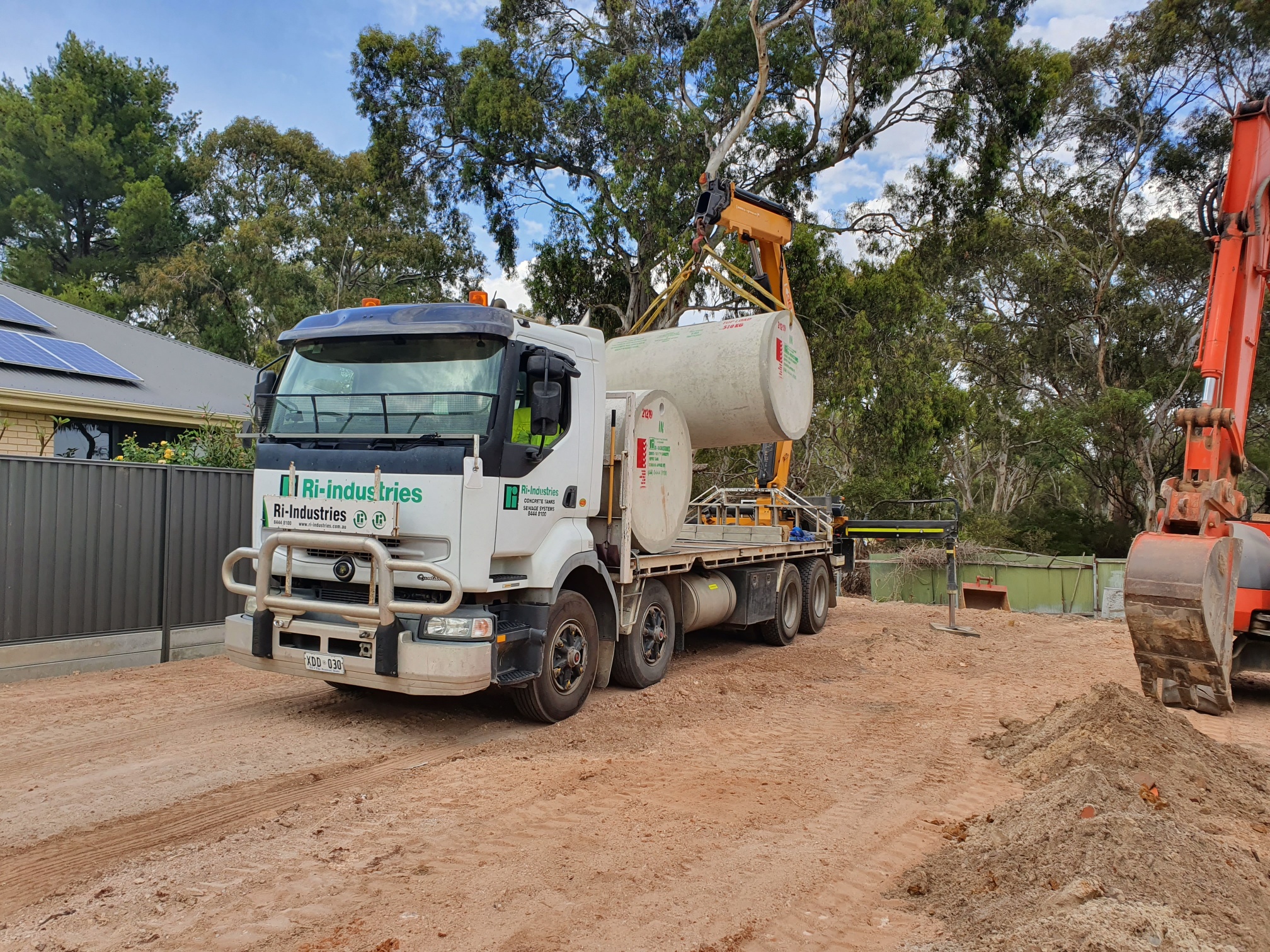
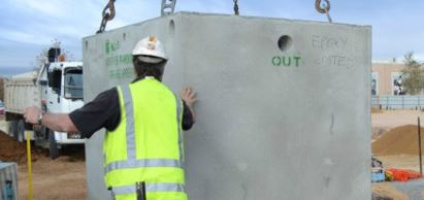
Your second question may be, “How do you get that large tank onto my property?” Another great question. As you can imagine, our trucks are large. They measure 10 metres long and 2.5 metres wide, therefore we need to assess the best way to unload your tank, taking factors into account such as:

  • We will need to reverse up to the hole therefore easy access is very important
  • A clear, level site is required to unload the tank in your excavated area
  • 4.7 metres is needed for the truck to pass under trees and overhead power lines
  • A minimum height clearance of 8 metres is required when unloading
  • 4 metres clearance is required between gate posts.
  • Once the truck is in position to complete the lift/delivery of the tank it needs an area of 6m wide and 10.5m long for the outriggers and rotation of the crane.

If you have concerns about the delivery of your new septic tanks, please don’t worry. We offer FREE on-site visit inspections by one of our drivers if we have one in the area. If not, we will speak with you over the phone about the site conditions to help make the process as smooth as possible. 

Do you have questions? We will be happy to answer! Please call Ri-Industries at 08 8444 8100.


Purchasing a Septic Tank

by Ri Industries

Learn about the process of purchasing a septic tankPurchasing a septic tank is not something one does often in life and may, at first, feel overwhelming. Ri-Industries would like to help ease your mind by explaining how the process works.

There are two circumstances when you might purchase a septic tank: for a new home build or for an existing home. Each circumstance follows its own process.

Purchasing a septic tank for a new home build: Typically speaking, the builder will handle the entire process. They will arrange for a wastewater engineer to determine the size and type of septic tank needed. This may be a STED point, common effluent point, or a soakage bed.  They will also arrange for a plumber (installer) to inspect the site for any other concerns that may arise from an installation perspective. However, the homeowner may decide to take the septic tank out of the home build and handle it directly. Therefore, the homeowner will be responsible for arranging the wastewater engineer and plumber. The homeowner may purchase the septic tank directly from Ri-Industries or he/she may instruct the plumber to purchase the septic tank from us.

Purchasing a replacement septic tank: The homeowner can choose to handle the entire process themselves which means they will be responsible to arrange for the wastewater engineer, the plumber/installer, and purchase the septic tank. Or, the homeowner may hire a plumber/installer who will manage all of the other steps for them.

Are you installing a Ri-Treat Waste Water Treatment System instead of a standard septic tank? If so, these units need to be ‘commissioned’ by a service agent, so you need to contact them two weeks prior to you moving into your new house. Generally, the procedure is to ensure that the tank is ¾ full of water and all pumps are operational.  The system should be fully established within two weeks, with clean water discharging to the irrigation system.

If a Ri-Treat unit is replacing an existing septic tank,  we will send the unit pre commissioned therefore ready to run and work as soon as the electricity is connected.

Ri-Industries has been in operation since 1947 and we have made it our life’s work to deliver outstanding pre-cast concrete products. We are committed to excellence, not only in our manufacturing techniques and processes but through every interaction we have with our customers. We appreciate the opportunity to speak with you about your septic tank needs. Please call us at 08 8444 8100 to speak with one of our experts.


Why Saddle Risers, Increments, and Cover Slabs are Beneficial for Septic Tanks

by Ri Industries

Yay! It’s time to get the septic tank pumped! Wait a minute, that’s not something people get excited about. Let’s face it, while we understand there is a need for a septic tank, it’s not something we like to think about on a regular basis. Once it’s been installed, we’d prefer to put it out of mind.

One good thing about septic tanks is that they are fairly low maintenance. If we follow simple rules about what should not be flushed, the tank should function well without much work on our end. There will come a time though, on average once every three – five years, when the tank should be pumped. Why? Because tanks breed bacteria which digests sewage to a sludge. The sludge builds up over time eventually leaving little room for new sewage. If not pumped, sewage will overflow into the disposal area causing it to fail. Failed disposal areas can be smelly and expensive to fix. So, when the time comes to pump the septic tank, we want it to be as inexpensive as possible and cause the least disruption to the landscaping as possible.

A common problem faced by septic tank maintenance companies is difficulty locating the tank. Sounds a bit funny, doesn’t it? But the tank is, after all, underground and it’s likely there have been years to develop beautiful landscaping around it. Wouldn’t it be awful if every three – five years the landscaping had to be destroyed simply to find the septic tank?

Thankfully, Ri-Industries has a solution to help the septic tank maintenance worker locate the tank without making a mess and ruining your landscaping. Saddle risers, increments, and cover slabs work together to help the septic tank maintenance worker avoid all that painful digging and disruption to your outdoor area. No more guessing the exact spot where the septic tank is located. The saddle makes it easy to find, open and access septic tanks to pump out the contents and quickly re‐seal the cover. The covers are gas tight to contain odours and water tight to prevent effluent leaking from the septic tank or water from entering the septic tank.  They can also stop children and stock falling into or accessing your septic tank.

Ri-Industries manufacture saddles risers, increments, and cover slabs:

  • To suit all horizontal septic and holding tanks
  • Coverslabs suitable for pedestrian traffic only
  • Radius of saddle riser varies to suit tank
  • Each component fitted with 1.3t ‘Swiftlift’ anchors for lifting

For answers to all your septic tank, saddle riser, increment, and cover slab questions, call us at 08 8444 8100. We look forward to hearing from you.

Preparing Your Septic Tank for Colder Weather

by Ri Industries

It was a brutally hot summer, but we made it through and are being rewarded with cooler temperatures now. As the days and nights continue to grow colder as we move through Autumn, it’s time to prepare your septic system to work its best during the long winter months. Let’s discuss tips to prepare your septic tank for the colder weather.

  • Get Pumped! Septic tanks don’t need to be pumped every year, in fact on average they should be pumped every 3 – 5 years, but if this is the year that yours should be pumped do it before it gets too cold outside. Colder temperatures mean the ground becomes more difficult to break through and accessing your tank is therefore more difficult
  • Inspection Time! Locate the lid of your septic tank and inspect it for cracks and/or holes. A secure lid is imperative to keep small animals, debris, and even children from getting inside the tank. Plus, we want to trap heat inside the tank because there is resident anaerobic bacteria in the septic tank that break down the solid waste materials and treat the raw wastewater that your household produces. The heat maintains a high level of metabolism among the bacteria. Ri-Industries offers stand-alone child-proof and vandal-proof concrete lids for our tanks should you need a replacement.
  • Protect! The drainage field around the septic tank should be protected during the cold months since freezing temperatures and frozen ground can cause damage. Insulate the drainage field by covering it with a layer of mulch a couple of inches thick.
  • Use It! Regular use of the septic system is important to keep things moving properly. Normal, everyday household use is typically sufficient. If you plan on being away during the winter months, arrange for someone to stop by and make sure your septic system gets some use.

That’s all there is to it! Just a few simple steps to help protect your septic tank and keep it working properly for you throughout the colder winter months. Of course, if you have questions or find you need a new septic tank, please call us at 08 8444 8100.


Wastewater Treatment Systems Help Conserve Water in the Home

by Ri Industries

Ri-IndustriesWhen rainwater is scarce, it’s important we look for ways to conserve. As we stated in our blog Times Are Dry, Adelaide recently reported its driest January since 1957. In that blog we offered helpful tips to conserve water around the home. One additional tip is to install a wastewater treatment system such as the Ri-Treat Wastewater Treatment System.

What is a wastewater treatment system? It is a system designed to treat the wastewater produced in your home to be clean enough to water the garden. Most homes in South Australia use potable (drinking) water for every household task. A wastewater treatment system allows the household to conserve the potable water, at least in terms of what you’d normally use to irrigate the garden.

What makes the Ri-Treat Wastewater Treatment System unique?

  • A mono cast 50 MPa reinforced concrete construction, with no fibreglass or plastic structural components, means that no untreated effluent will escape into the environment.
  • The high quality bio filter medium enhances the purity of the recycled water.
  • All irrigation pumps are submersible, quiet, reliable and inexpensive to operate.
  • The Japanese Air Pump offers the most reliable and efficient aeration and has a 2 year warranty.
  • Ri-Treat tanks come in three sizes, offering maximum flexibility and even allowing for an internal spa bath.
  • Child-proof and vandal-proof lids give you additional peace of mind.
  • A high quality irrigation kit for more effective irrigation.
  • The septic tank is sealed as an additional precaution.
  • A manufacturers warranty on tank construction.

For homes needing a smaller wastewater treatment system, or where site access is difficult, Ri-Industries is proud to offer FujiClean Fibreglass Tanks. These fibreglass tanks are a lightweight alternative to our Ri-Treat concrete tanks, and offer the following advantages:

  • Proven design and high performance
  • Simple maintenance and high energy efficiency
  • An environmentally friendly design, resulting in lower operational cost
  • Ease of installation in locations where access is difficult or limited
  • A warranty of 15 years for tanks and 2 years for electrical components.

If you’d like to learn more about either of the wastewater treatment systems offered by Ri-Industries, please call and speak with one of our experts at 08 8444 8100.

Times Are Dry

by Ri Industries

Adelaide just recorded its driest January since 1957 and water has been in short demand. This seems like a good time to discuss how you can save water in your home. Let’s look at water use in the bathroom and kitchen.

Did you know 40% of all water used in the home is used in the bathroom? To help conserve water and save money, the first thing to do is look at the appliances and look for products with a high star rating. The average home can save approximately $150/year by installing a standard 3-star rated shower head which costs approximately $20.

Some simple habit changes can also help save water in the bathroom:

  • Take shorter showers.
  • Use a timer in the shower to help you keep track of time.
  • Use a bucket to collect water while waiting for the water to get hot. Use the collected water on plants or other household uses.
  • Insulate hot water pipes.
  • Do not run water while shaving. Use water only to rinse off.
  • Only use as much water as is necessary in the bath.
  • Monitor the temperature as the bath fills to avoid adding water to regulate the temperature.
  • Collect used bathwater to use in the garden or to wash cars.
  • Use 4-star rated toilets.
  • Regularly check toilets for leaks and repair when needed.
  • Turn the water in the sink off when brushing teeth or shaving. Use running water only to rinse.

Another method to conserve water is to install a rainwater tank such as the one manufactured by Ri-Industries. Once the rain starts coming again, it can be collected from your roof and gutters. The rainwater tanks Adelaide can be connected to your toilet plumbing. Then, every time you flush, you are using rainwater, instead of water from the mains. Recycled rainwater is an excellent way to conserve water, plus it will save on your monthly water bills.

Let’s move to the kitchen where around 10% of total household water is consumed. Here are tips to help save water:

  • Dishwashers consume the most water in the kitchen. Look for the WELS label of water efficiency. The more stars, the more water efficient the appliance. Only run the dishwasher when it is full. If the dishwasher has a rinse-hold setting, use it in lieu of rinsing dishes with sink water.
  • Do not run water over frozen food to defrost. Instead, defrost overnight in the refrigerator.
  • Use washing-up liquid sparingly to limit the amount of rinsing required.
  • Waiting for the running water to warm up? Catch it in a container and use it to water plants, rinse dishes, or wash fruits and vegetables.
  • Use a plugged sink or a bowl of water whenever possible to avoid running the tap.

Small changes can mean big savings in water consumption. In dry times like these, it’s important for us all to make an effort. Call Ri-Industries, at 08 8444 8100, to learn more about our concrete rainwater tanks.

Safe Cleaning Products for Ri-Treat Waste Water Treatment System

by Ri Industries

The Ri-Treat Waste Water Treatment System is an environmentally friendly wastewater treatment system Adelaide guaranteed to be of superior quality. It is designed to reclaim the wastewater produced by your home, recycle it, and re-use it around your home. It is a great conservation tool and a way to save money on your water bill.

As with anything in life, to get the best results you should make sure to take proper care of the system. In addition to caring for the system itself, you should also monitor the substances which make their way into the system. Why is this so important? Substances mixed with wastewater will be reclaimed and recycled and will make their way back into your ecosystem. It is important that they don’t have a harmful effect.

One area which deserves close attention is your choice of household cleaners. You want to avoid putting poisonous materials into your waste water. The following are suitable cleaners:

  • Vinegar
  • Bicarbonate of soda
  • Soap – in the form of washing powder, dishwashing liquid and ordinary body soap
  • Biodegradable cleaning liquids

Disinfectants should be used sparingly. Bleach, antibacterial solutions or toilet cleaners should NEVER be used.  Should any form of bleach enter the system this may cause the system to work inefficiently. The bleach will kill off all the ‘good bacteria’ and can create an odour in the system. In addition, doing two or more loads of washing in a 24-hour period can mean the system may not operate effectively. It is recommended that clothing be washed over a period of time to ensure effective operation of the system.

Ri-Industries is proud to deliver quality products that help residents of South Australia with the important task of conserving water. Please call us, at 08 8444 8100, to learn more about our products.

Is Your Septic Tank Ready for Summer?

by Ri Industries

Summer is on the way and for many of us that means frequent house guests and lots of time spent outdoors. After many long cold months of being cooped up indoors, we can’t wait to step outside and take deep breaths of fresh air while enjoying the beautiful landscape of our home with our friends and family. One kink that might ruin that plan is a septic tank with a problem.

What are some signs that your septic tank may need maintenance?

  • contaminated tanks
  • untreated sewage discharge
  • soft smell spots
  • pooling water
  • slow drains
  • an overly healthy lawn
  • heavy rainfall

Did rainfall surprise you? Heavy rainfalls can cause the water table to rise. When the water table rises too high, it can saturate the septic tank’s soakage field which can cause contaminants to back up into the septic tank. So, when there has been heavy rain, take steps to put less stress on the septic system. For example, flush the toilet less, take shorter showers, and do less laundry. These are important tips to remember especially when you have guests staying with you and therefore the toilets, showers, laundry, etc. are used more. Also, divert water flow away from the area of the septic tank. Keep the soil around the septic tank from getting too saturated.

One more tip, watch how you mow your lawn! The drains that feed your septic system are buried underground, but not that deeply. A heavy riding mower and an improperly set mowing blade could damage the septic lines causing a dangerous backup in the septic system.

It is best to take preventative action to avoid major problems with the septic system so follow the recommendations for best care practices and be familiar with warning signs that maintenance may be needed. Questions?  Call Ri-Industries , 08 8444 8100, and we’ll be happy to help!

Garden with Less Water Using the Ri-Treat Waste Water Treatment System

by Ri Industries

As the weather warms, many of us experience a condition where our thumbs begin to turn green, the outdoors beckons, and the dirt calls us to dig in and get planting. If you love to garden, or simply love to have a green lawn, it’s a given you will spend ample time watering your property.

Did you know that an average Australian household will use 40% of its water in the garden? This makes the garden a prime location for water-saving techniques. Here are a few suggestions:

  • Install a dripper system and only water during the permitted hours.
  • Use mulch to prevent water loss through evaporation and prevent soil erosion.
  • Plant your garden in watering zones. Group plants that require large amounts of water together to reduce your water use.
  • Choose a drought resistant lawn.
  • Don’t over water your lawn – train it to use less water by encouraging the roots to grow deeper. Let grass grow longer in summer months which will shade the soil surface and reduce evaporation loss.
  • Don’t water during windy weather – water will blow away from where it’s needed most.
  • Instead of hosing, use a broom or rake to clean paths, paved areas and patios.

Another great tool to help reduce water waste is our  Ri-Treat Waste Water Treatment System. The design is unique to Ri-Industries and guaranteed to be of superior quality.

Choosing a Ri-Treat waste water treatment system gives you a number of advantages:

  • A mono-cast 50 MPa reinforced concrete construction, with no fibreglass or plastic structural components, means that no untreated effluent will escape into the environment.
  • The high-quality bio-filter medium enhances the purity of the recycled water.
  • All irrigation pumps are submersible, quiet, reliable and inexpensive to operate.
  • The Japanese Air Pump offers the most reliable and efficient aeration and has a 2-year warranty.
  • Ri-Treat tanks come in three sizes, offering maximum flexibility and even allowing for an internal spa bath.
  • Child-proof and vandal-proof lids give you additional peace of mind.
  • A high-quality irrigation kit for more effective irrigation.
  • The septic tank is sealed as an additional precaution.
  • manufacturers warranty on tank construction.

The operation of the unit has other unique features, such as automatic sludge and skimmer returns.

So go ahead and grow a luxurious lawn and lavish garden! Enjoy the fruits of your labour because Ri-Industries can help eliminate any guilt you might feel from the amount of watering needed to keep your garden beautiful. Call us to learn more about the Ri-Treat Waste Water System at 08 8444 8100.